
The Art of Custom Fine Jewelry Design
Introduction to Bespoke Craftsmanship

We all seek ways to express our unique identity. What could be more personal than a custom gold pendant? These aren't just pieces of jewelry; they are wearable stories, cherished memories, and future heirlooms. We believe everyone deserves a piece that truly reflects their journey.
This comprehensive guide will help you navigate the exciting world of custom gold pendants. We will explore the many types available, from initial designs to intricate symbols. We will also delve into gold purities and colors, helping you understand their impact on durability and value.
Join us as we uncover the meticulous process of creation, from initial design to advanced engraving techniques. We will discuss personalization options, pricing factors, and best practices for pairing your pendant with the perfect chain. It's all about crafting custom and personalized jewelrythat truly speaks to you. Finally, we will cover essential care tips and insights into authenticity and long-term value. We aim to equip you with all the knowledge needed to create a bespoke piece that will be treasured for generations.
Selecting Precious Metals for Custom Fine Jewelry
The foundation of any exquisite custom gold pendant lies in the selection of its precious metal. Gold, renowned for its timeless beauty and intrinsic value, comes in various purities and colors, each offering distinct characteristics that influence the pendant's appearance, durability, and overall feel. Understanding these nuances is crucial for making an informed decision that aligns with your vision and lifestyle.
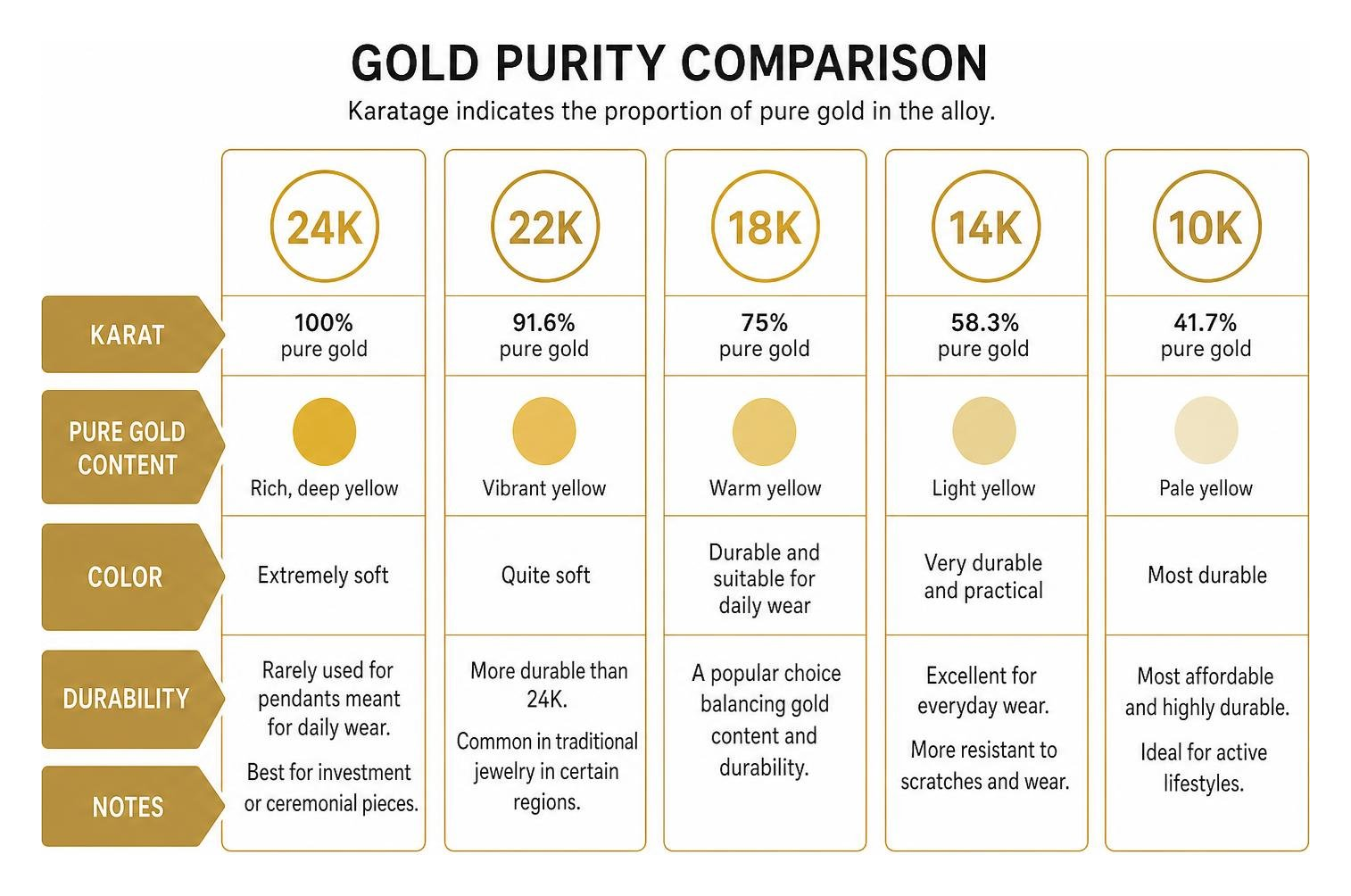
When we discuss gold purity, we refer to its karatage, which indicates the proportion of pure gold in the alloy. Pure gold, or 24K gold, is inherently soft and malleable. For jewelry, it is typically alloyed with other metals like copper, silver, zinc, or palladium to enhance its strength, durability, and to achieve desired color variations. This alloying process is what gives us the spectrum of gold options available for custom pendants.
Understanding Karatage and Durability
The most common gold purities for custom pendants are 10K, 14K, 18K, 22K, and 24K. Each karatage represents a different gold content, directly impacting its properties:
- 24K Gold (100% pure gold):While undeniably luxurious, 24K gold is rarely used for pendants meant for daily wear due to its extreme softness. It's prone to scratching and bending, making it more suitable for investment or ceremonial pieces. Its rich, deep yellow hue is unparalleled.
- 22K Gold (91.6% pure gold):Still quite soft, 22K gold offers a beautiful, vibrant yellow color and is more durable than 24K. It's often found in traditional jewelry from certain regions but is less common for modern custom pendants due to its relative softness compared to lower karats.
- 18K Gold (75% pure gold): A popular choice for fine jewelry, 18K gold strikes an excellent balance between purity and durability. It retains a rich gold color and is significantly more resistant to scratches and dents than 22K or 24K. This karatage is often favored for its luxurious feel and lasting quality, making it ideal for heirloom pieces.
- 14K Gold (58.3% pure gold):As of September 2026, 14K gold remains the predominant choice for custom name pendants, accounting for a significant majority of market offerings. This popularity stems from its exceptional balance of durability, affordability, and aesthetic appeal. It's harder and more resistant to wear and tear than 18K gold, making it perfect for everyday wear. Its slightly lighter gold hue is also widely appreciated.
- 10K Gold (41.7% pure gold):The most durable and least expensive of the solid gold options, 10K gold is a practical choice for pieces that will endure significant daily activity. Its lower gold content means it's harder and more scratch-resistant, though its color is a paler yellow.
When considering everyday durability, 14K and 18K gold are typically recommended. They offer sufficient scratch resistance and structural longevity without compromising too much on the pure gold content. All genuine gold jewelry will bear a karat stamp (e.g., 14K, 18K, .585, .750) to certify its purity.
Exploring Yellow, White, and Rose Gold Alloys
Beyond purity, custom gold pendants offer a palette of colors: yellow, white, and rose gold. These distinct hues are achieved by alloying pure gold with different metals:
- Yellow Gold: The classic and most traditional choice, yellow gold is created by mixing pure gold with silver and copper. The exact proportions determine the intensity of the yellow. 18K yellow gold typically has a deeper, richer color than 14K yellow gold, which has a slightly lighter tone due to its higher alloy content. Market data from September 2026 consistently shows yellow gold as the most popular color, often outnumbering white and rose gold options in available selections.
- White Gold: White gold is an alloy of pure gold with white metals such as palladium, silver, or nickel (though nickel is less common now due to allergy concerns). To achieve its bright, silvery-white appearance, white gold jewelry is typically plated with a layer of rhodium. Rhodium plating enhances its luster and protects it from tarnish. Over time, this plating can wear off, revealing a slightly yellowish tint underneath, necessitating re-plating every few years to maintain its pristine look.
- Rose Gold: This romantic and increasingly popular color is created by alloying pure gold with a higher proportion of copper, which imparts its distinctive reddish-pink hue. The more copper in the alloy, the redder the gold. Rose gold is known for its durability, as copper is a strong metal. It does not require rhodium plating and maintains its color beautifully over time. Its warm tones complement various skin undertones, making it a versatile choice.
The choice of gold color is often a matter of personal preference and how it complements your skin tone and existing jewelry collection. Each color offers a unique aesthetic and contributes to the overall character of your custom pendant.
The Step-by-Step Creation Process
Bringing a custom gold pendant to life is a journey that combines artistic vision with meticulous craftsmanship and advanced technology. It's a collaborative process where your ideas are transformed into a tangible, wearable piece of art. From the initial spark of inspiration to the final polish, every step is carefully executed to ensure your pendant is exactly as you envisioned.
The creation process typically begins with a detailed consultation, where your design concepts, desired materials, and personalization elements are discussed. This foundational stage is critical for capturing the essence of your vision. Following this, jewelers employ a blend of traditional techniques and modern innovations, such as 3D CAD modeling and rapid prototyping, to ensure precision and quality at every production milestone. The journey of creating custom and personalized jewelry is a testament to the blend of artistry and engineering.
Translating Concepts Into Custom Fine Jewelry CAD Models
The design phase is where your ideas begin to take shape. It starts with a client consultation, often involving sketches, reference images, and discussions about style, size, and desired aesthetic. Once a clear concept is established, the jeweler's designers translate these initial ideas into detailed 2D sketches.
The next crucial step involves digital modeling, where these sketches are transformed into a three-dimensional computer-aided design (CAD) model. This sophisticated software allows for unparalleled precision and the ability to visualize the pendant from every angle. You'll typically receive high-resolution renderings of the CAD model, allowing you to review the design, suggest modifications, and approve the final blueprint before physical production begins. This revision policy ensures that the design perfectly matches your expectations.
After CAD approval, a physical prototype is often created using rapid prototyping technologies, such as 3D printing. This allows for a tangible representation of the pendant, enabling you to assess its size, weight, and proportions before the precious metal is cast. This precision prototyping step is invaluable for making any last-minute adjustments and ensuring complete satisfaction.

Advanced Laser and Hand Engraving Techniques
Engraving adds a deeply personal touch to custom gold pendants, transforming them into truly unique keepsakes. Jewelers employ various techniques, each offering distinct aesthetic qualities:
- Laser Engraving: This modern method uses a focused laser beam to etch designs, text, or images onto the surface of the gold. Laser engraving offers exceptional precision and can create intricate details, fine lines, and even photo-realistic images. It's particularly effective for small, detailed text, logos, or complex patterns. The depth of laser engraving can vary, from a subtle surface mark to a deeper cut, depending on the desired effect.
- Hand Engraving: A time-honored art form, hand engraving involves skilled artisans using specialized tools (gravers) to meticulously carve designs into the metal by hand. This technique offers a unique, artisanal quality with subtle variations and a distinctive relief engraving effect that machine methods cannot replicate. Hand engraving allows for greater depth detailing and a more tactile feel, making it ideal for family crests, monograms, or bespoke artwork where a handcrafted touch is desired.
- Micro-Finishing: Regardless of the engraving method, micro-finishing techniques are applied to ensure the engraved areas are smooth, polished, and free of any rough edges, enhancing both the aesthetic appeal and the comfort of the pendant.
The choice between laser and hand engraving often depends on the complexity of the design, the desired aesthetic, and the budget. Both methods contribute significantly to the personalization and beauty of a custom gold pendant.
Personalization Techniques and Aesthetic Elements
The true magic of a custom gold pendant lies in its ability to tell your unique story. The range of personalization options is vast, allowing you to imbue your piece with deep personal meaning and aesthetic appeal. From subtle initial pendants to intricate shield silhouettes, each choice contributes to a piece that is uniquely yours, designed with aesthetic symmetry and symbolic motifs in mind.
Bespoke Motifs, Handwriting, and Structural Styles
Personalization goes far beyond simple text. Modern goldsmithing allows for an astonishing array of bespoke motifs and unique elements:
- Name and Initial Pendants:These are perhaps the most classic forms of personalization, ranging from elegant script fonts to bold block letters. Initial pendants can feature a single letter or multiple intertwined initials, often adorned with subtle embellishments.
- Handwriting Engravings:Imagine carrying a loved one's actual handwriting close to your heart. This incredibly intimate option involves taking a sample of handwriting and precisely engraving it onto your pendant. It's a powerful way to preserve memories and connections.
- Fingerprint Imprints: Another deeply personal option, fingerprint pendants capture the unique ridges and swirls of a loved one's fingerprint. These can be subtly etched or raised in relief, offering a tactile connection to the individual.
- Symbol and Icon Engravings:From celestial bodies and religious symbols to abstract designs and meaningful icons, engraving symbols allows you to express beliefs, passions, or significant life events.
- Custom Artwork and Logos:For those with a specific vision, jewelers can often translate custom artwork, company logos, or unique designs into a pendant. This is particularly popular for commemorating achievements or representing personal brands.
- Family Crests and Heraldry:For a touch of heritage, family crests can be intricately engraved, often on shield-shaped pendants, symbolizing lineage and pride.
- Commemorative Dates and Coordinates: Engraving significant dates (birthdays, anniversaries) or geographical coordinates (where you met, where you live) adds a layer of personal history to your pendant.
- Gemstone Settings:Incorporating birthstones or other meaningful gemstones can add color, sparkle, and additional symbolism to your custom design. These can be flush-set, bezel-set, or prong-set, depending on the desired aesthetic and security.
- Structural Styles: The overall shape and structure of the pendant also contribute to its personalization. Options range from classic round or oval designs to more abstract, geometric, or organic forms. Shield silhouettes, dog tags, and bar pendants are also popular choices, offering different canvases for engraving and embellishment.
Pairing Pendants with Chains for Cohesive Custom Fine Jewelry Sets
A custom gold pendant, no matter how exquisite, is incomplete without the perfect chain. The right chain not only supports the pendant but also enhances its beauty and ensures comfortable wear. Several factors come into play when selecting a chain:
- Length: Chain lengths typically range from 16 inches (choker style) to 30 inches or more (long opera style). A 16-inch chain sits at the collarbone, an 18-inch chain rests just below, and a 20-inch chain falls a few inches lower. The ideal length depends on personal preference, the pendant's size, and how you intend to wear it (e.g., layered with other necklaces, over clothing).
- Style: There's a vast array of chain styles, each offering a different look and feel.
- Curb Chains: Feature interlocking, flattened links, offering a classic and robust look.
- Rope Chains: Consist of multiple gold strands twisted together, creating a textured and substantial appearance.
- Box Chains: Made of square links connected to form a smooth, strong chain.
- Snake Chains: Composed of tightly linked plates, giving them a sleek, flexible, and almost solid appearance.
- Wheat Chains: Resemble stalks of wheat woven together, known for their intricate texture and strength.
- Cable Chains: The most basic and versatile, with uniform oval links.
- Figaro Chains: Feature alternating small and long flattened links, offering a distinct pattern.
- Weight and Thickness: The chain's weight and thickness should be proportionate to the pendant. A delicate pendant might be overwhelmed by a thick, heavy chain, while a substantial pendant requires a robust chain to ensure security and balance. Consider the bail proportion – the loop through which the chain passes – to ensure the chain fits comfortably and allows the pendant to hang correctly.
- Metal and Color Matching: For a cohesive look, it's generally recommended to match the chain's gold color and purity to that of the pendant. For instance, a rose gold pendant would pair beautifully with a rose gold chain. However, intentional mixing of metals can also create a stylish, layered effect.
The best chain complements the pendant's design, ensures its security, and aligns with your personal style, creating a harmonious and elegant custom fine jewelry set.
Authenticity, Pricing, and Long-Term Value Retention
Investing in a custom gold pendant is not just about acquiring a beautiful piece of jewelry; it's also about making a tangible investment. Understanding the factors that drive its production costs, assure its quality, and contribute to its long-term value is essential. From the fluctuating spot gold price to the meticulous maker fees, each element plays a role in determining the intrinsic value and potential for appreciation of your bespoke piece.
Factors Driving Production Costs and Valuation
The price of a custom gold pendant is influenced by several key variables, making each piece's valuation unique:
- Gold Weight: This is often the most significant factor. The heavier the pendant, the more gold it contains, directly impacting its cost based on the current spot gold price.
- Karat Grade: As discussed, higher karat gold (e.g., 18K vs. 14K) contains a greater percentage of pure gold, making it more expensive per gram. While custom name pendants can range widely in price, from approximately €3,165 to €19,471, with most falling between €5,000 and €10,000 as of September 2026, the karat grade plays a crucial role in determining where a specific piece falls within this spectrum.
- Design Complexity: Intricate designs with fine details, multi-dimensional elements, or complex gemstone settings require more design time, specialized tools, and skilled labor. A simple, flat engraved pendant will naturally cost less than a sculptural, open-work design.
- Casting Labor and Tooling Expenses: The process of creating a custom mold, casting the gold, and subsequent finishing work involves significant labor and specialized equipment. Unique designs may require custom tooling, adding to the overall cost.
- Engraving Method: Hand engraving, being a highly skilled artisan craft, typically incurs higher costs than laser engraving, though both contribute to the overall value.
- Gemstone Inclusion: If your design includes diamonds or other precious gemstones, their quality (cut, color, clarity, carat weight), type, and number will significantly add to the final price.
- Maker Fees/Artisan Labor:The expertise of the designer and jeweler, their brand reputation, and the time invested in creating a one-of-a-kind piece are reflected in the maker fees. These fees compensate for the artistic vision, craftsmanship, and personalized service.
While custom gold pendants are not typically volatile investments like stocks, they do retain value due to their gold content and often appreciate over time, especially if they are well-maintained and hold sentimental significance. Some jewelers may offer buyback, resale, or exchange options, though these vary widely and should be discussed upfront.
Quality Assurance, Hallmarks, and Sourcing
Ensuring the quality and authenticity of your custom gold pendant is paramount. Several indicators provide peace of mind:
- Official Assay Marks (Hallmarks): In many countries, it is legally required for gold jewelry to bear a hallmark, which is a small stamp indicating its metal purity (e.g., 14K, 18K, .585, .750) and often includes a maker's mark or sponsor's mark. These marks are applied by independent assay offices that test the metal content, guaranteeing its authenticity. Always look for these marks on your custom piece.
- Purity Certification:Reputable jewelers will provide a certificate of authenticity detailing the gold's karatage, weight, and any included gemstones. This document serves as proof of the item's specifications and value.
- Ethical Sourcing: In September 2026, ethical sourcing remains a critical concern for discerning buyers. Inquire about the jeweler's sourcing practices for both gold and any gemstones. Many jewelers are committed to using recycled metals or gold from certified conflict-free mines, ensuring that your beautiful piece does not come at an ethical cost.
- Authenticity Guarantee: A trustworthy jeweler will stand behind the quality and authenticity of their work, offering guarantees on the metal purity and craftsmanship.
Frequently Asked Questions About Custom Fine Jewelry Design
Embarking on the journey of creating a custom gold pendant often brings forth a myriad of questions. We've compiled answers to some of the most common inquiries to help you navigate the process with confidence, ensuring you're well-informed about timelines, care, and potential modifications.
How long does the custom design and manufacturing process typically take?
The timeline for creating a custom gold pendant can vary significantly based on the complexity of the design, the jeweler's current workload, and the efficiency of the approval phases. Generally, you can expect the entire process to unfold over several weeks, often ranging from 4 to 8 weeks from initial consultation to final delivery.
Here’s a typical breakdown:
- Initial Consultation & Design Conception (1-2 weeks): This phase involves discussing your ideas, creating sketches, and refining the concept.
- CAD Modeling & Client Approval (1-3 weeks): Once the concept is solid, the design is translated into a 3D CAD model. Revisions and your final approval of the digital rendering are crucial here.
- Production & Casting Schedule (2-4 weeks): After CAD approval, the physical creation begins. This includes 3D printing a wax model, casting the gold, and initial finishing.
- Engraving & Final Finishing (1-2 weeks): Any requested engravings are meticulously applied, followed by polishing and final quality checks.
- Shipping & Delivery (A few days to 1 week): Once the pendant passes all quality control, it's prepared for shipment.
It's important to discuss specific lead times with your jeweler, especially if you have a particular deadline. Clear communication and prompt feedback during the approval phases can help streamline the process.
How should custom solid gold pendants be cleaned and maintained?
Proper care and maintenance are essential to preserve the beauty and longevity of your custom gold pendant. Solid gold is durable but can still accumulate dirt, oils, and scratches.
Here are some best practices:
- Regular Cleaning: For routine cleaning, mix a few drops of mild dish soap with warm water. Soak your pendant for 10-15 minutes, then gently scrub it with a soft-bristle brush (like a soft toothbrush), paying attention to crevices. Rinse thoroughly under cool, running water and pat dry with a soft, lint-free cloth.
- Polishing Cloths: For a quick shine and to remove light tarnish, use a specialized jewelry polishing cloth. These cloths are often treated with a gentle cleaning agent.
- Avoid Harsh Chemicals: Keep your pendant away from harsh chemicals such as chlorine bleach, household cleaners, and even some cosmetics and perfumes, as these can damage the gold or any gemstones. Remove your pendant before swimming, cleaning, or applying lotions.
- Professional Cleaning:Consider having your pendant professionally cleaned by your jeweler once a year. They can use ultrasonic cleaners (which use high-frequency sound waves to remove dirt) or steam cleaners, and also inspect for any potential issues like loose prongs.
- Storage Tips: Store your pendant in a soft cloth pouch or a jewelry box with separate compartments to prevent it from scratching against other pieces.
- Routine Inspection:Periodically inspect your pendant for any signs of wear, especially around clasps, bails, and gemstone settings. Early detection of issues can prevent loss or further damage.
Adhering to these care guidelines will ensure your custom gold pendant remains a cherished item for generations.
Can a personalized gold piece be altered or resized after completion?
While custom gold pendants are designed to be perfect from the outset, situations may arise where modifications are desired or necessary. The possibility of alteration or resizing depends heavily on the pendant's design, the extent of the changes, and the jeweler's capabilities.
- Structural Alterations: Minor structural alterations, such as adjusting the bail size or adding a small loop, are often possible. However, significant changes to the pendant's core shape or dimensions can be challenging and sometimes not feasible without completely remaking the piece.
- Laser Re-welding: Modern laser welding techniques allow for precise and minimally invasive repairs or additions to gold jewelry, making certain alterations possible without compromising the metal's integrity.
- Engraving Adjustments:Modifying existing engravings can be tricky. Adding new engravings is usually straightforward, but removing or changing existing ones may require polishing away the original engraving and re-engraving, which can affect the metal's thickness or finish. In some cases, it might be impossible to completely erase an engraving without leaving a trace.
- Gemstone Changes: Replacing gemstones is generally possible, provided the setting allows for it.
- Warranty Scope and Modification Limits: Always consult your jeweler regarding any desired modifications. They can advise on what is possible, the associated costs, and how any alterations might affect the pendant's warranty. Unauthorized modifications by another jeweler could potentially void your original warranty.
It's always best to be as precise as possible during the initial design and approval stages to minimize the need for post-completion modifications.
Conclusion
The journey of designing a custom gold pendant is a profoundly personal and rewarding experience. It's an opportunity to translate your deepest sentiments, cherished memories, and unique aesthetic into a tangible form of wearable art. From selecting the perfect gold purity and color to meticulously crafting every detail through advanced engraving techniques, each step is imbued with intention and artistry.
These bespoke creations are more than just jewelry; they are modern heirlooms, destined to be passed down through generations, carrying with them stories and legacies. We believe in the power of individual expression and the lasting value of artisanal craftsmanship. By understanding the intricacies of materials, the nuances of the creation process, and the importance of authenticity and care, you are empowered to create a piece that truly resonates with your spirit.
As we look to September 2026 and beyond, the demand for personalized, high-quality fine jewelry continues to grow, reflecting a desire for pieces that offer both intrinsic beauty and deep personal meaning. We hope this guide has illuminated the path to creating your own custom gold pendant – a testament to your unique story, crafted with the timeless elegance of modern goldsmithing.
- The Art of Custom Fine Jewelry Design - October 20, 2026
- Comprehensive Approaches to Facial Rejuvenation and Skincare - October 19, 2026
- How Salt Lake City, Utah Businesses Can Build Network Resilience for Weather, Growth, and Hybrid Work - October 18, 2026


