Comprehensive Approaches to Facial Rejuvenation and Skincare
The Biological Science of Facial Rejuvenation and Skincare

The desire for healthy, youthful skin is timeless. In September 2026, advancements in dermatological science and aesthetic technology offer more precise and effective solutions than ever before. Understanding the complex processes of skin aging is key to choosing the right strategies for facial rejuvenation and skincare.
This field extends beyond simple cosmetic fixes. It involves a deep dive into cellular biology, the latest breakthroughs in non-invasive treatments, and, when appropriate, advanced surgical options. Achieving lasting skin vitality requires a comprehensive approach.
This extensive guide will explore the full spectrum of modern facial rejuvenation. We will uncover the biological science behind skin health, examining how daily skincare routines integrate with cutting-edge clinical procedures. From understanding cellular longevity to exploring options like personalized facial rejuvenation surgeries, we aim to provide a clear roadmap to achieving your skin goals.
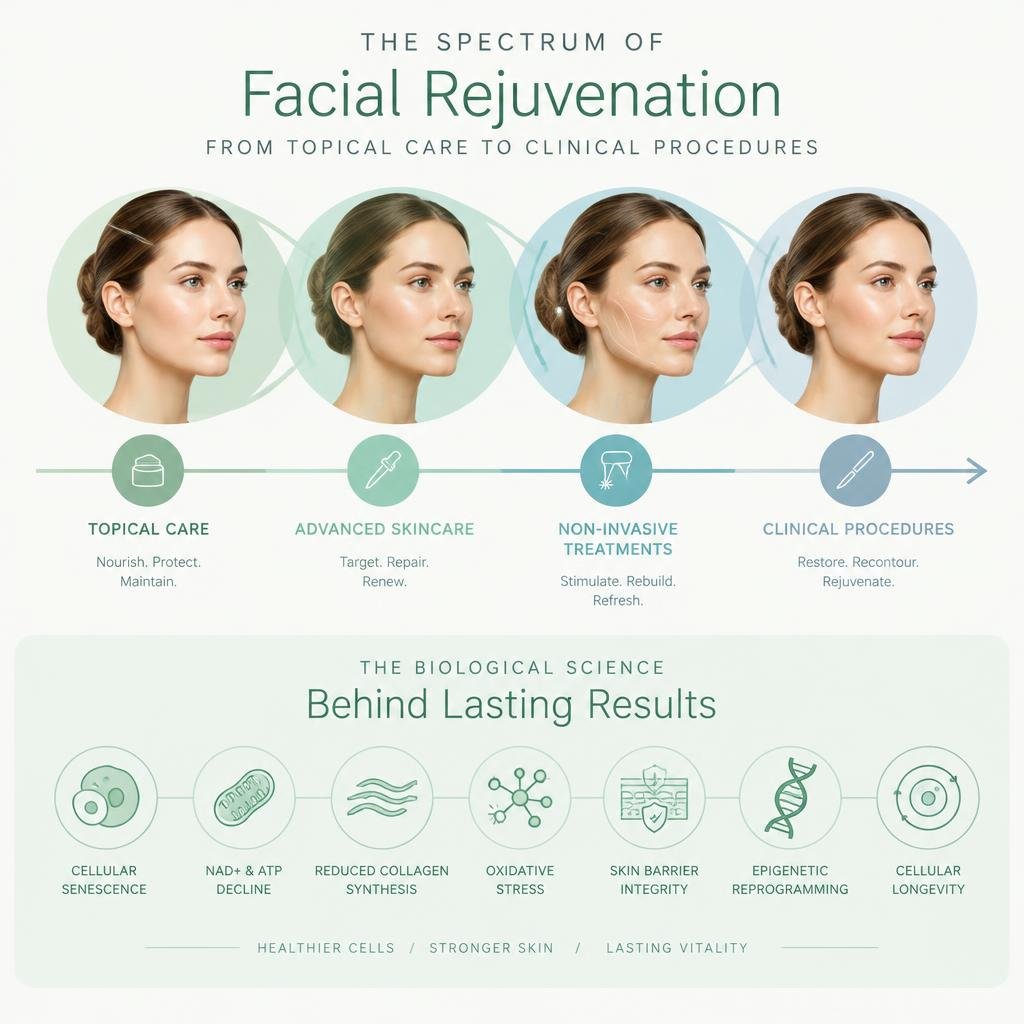
At its core, facial rejuvenation is about addressing the biological mechanisms of aging. Skin aging is a complex process influenced by both intrinsic factors (genetics, cellular metabolism) and extrinsic factors (UV radiation, pollution, lifestyle). Understanding these underlying processes, such as cellular senescence, the depletion of NAD+ (nicotinamide adenine dinucleotide) and ATP (adenosine triphosphate), diminished collagen synthesis, and increased oxidative stress, is crucial for effective intervention. A robust skincare regimen also prioritizes maintaining the integrity of the skin barrier, which acts as the body's first line of defense against environmental aggressors.
Epigenetic Reprogramming and Cellular Longevity
Recent research has highlighted the role of epigenetics – changes in gene expression without altering the DNA sequence – in skin aging. Advanced skincare aims to influence these epigenetic signals to reprogram cellular behavior, promoting a more youthful function. For instance, some cutting-edge serums are designed to reduce senescent cells, often referred to as “zombie cells,” which accumulate with age and contribute to inflammation and tissue damage. Clinical trials for such products have shown a significant reduction in senescent cells (e.g., 52% reduction after 3 months) and a substantial increase in collagen synthesis (e.g., 200% increase), alongside a decrease in reactive oxygen species (ROS) and an increase in cellular energy (ATP).
Ingredients like plant exosomes, derived from sources such as PhytoCellTec™ Goji, are emerging as powerful tools in this arena. These microscopic vesicles facilitate cellular communication and efficient delivery of active compounds, potentially enhancing tissue regeneration and mimicking the effects of treatments like microneedling without invasive procedures. By supporting the extracellular matrix and boosting collagen types I, III, and XVII, these advanced formulations aim to restore skin's structural integrity and elasticity.
Integrating Daily Regimens with Facial Rejuvenation and Skincare
While advanced treatments offer significant results, the foundation of healthy, youthful skin lies in a consistent and effective daily skincare regimen. This typically includes:
- Topical Retinoids: Derivatives of Vitamin A, retinoids are gold-standard ingredients known for stimulating collagen production, accelerating cell turnover, and improving skin texture and tone.
- Multi-molecular Hyaluronic Acid: This humectant attracts and retains moisture, providing deep hydration and plumping the skin at various depths.
- Photoprotection: Daily use of broad-spectrum sunscreen is non-negotiable for preventing UV-induced collagen breakdown, hyperpigmentation, and premature aging.
- Active Antioxidants:Ingredients like Vitamin C, Vitamin E, and ferulic acid neutralize free radicals generated by environmental stressors, protecting cells from oxidative damage.
Integrating these components into a routine ensures continuous support for skin health. For those seeking optimal results, selecting clinically-proven skincare products can make a profound difference, as these often contain advanced ingredients and are backed by efficacy studies. Such products work synergistically with professional treatments to maintain and extend their benefits, contributing to long-term skin longevity.

Non-Invasive Energy and Resurfacing Modalities
For those seeking more significant improvements than topical skincare alone can provide, a range of non-invasive energy and resurfacing modalities offers effective solutions with varying degrees of downtime. These physician-directed treatments leverage scientific principles to stimulate skin repair and rejuvenation.
Laser Systems and Wavelength Selection
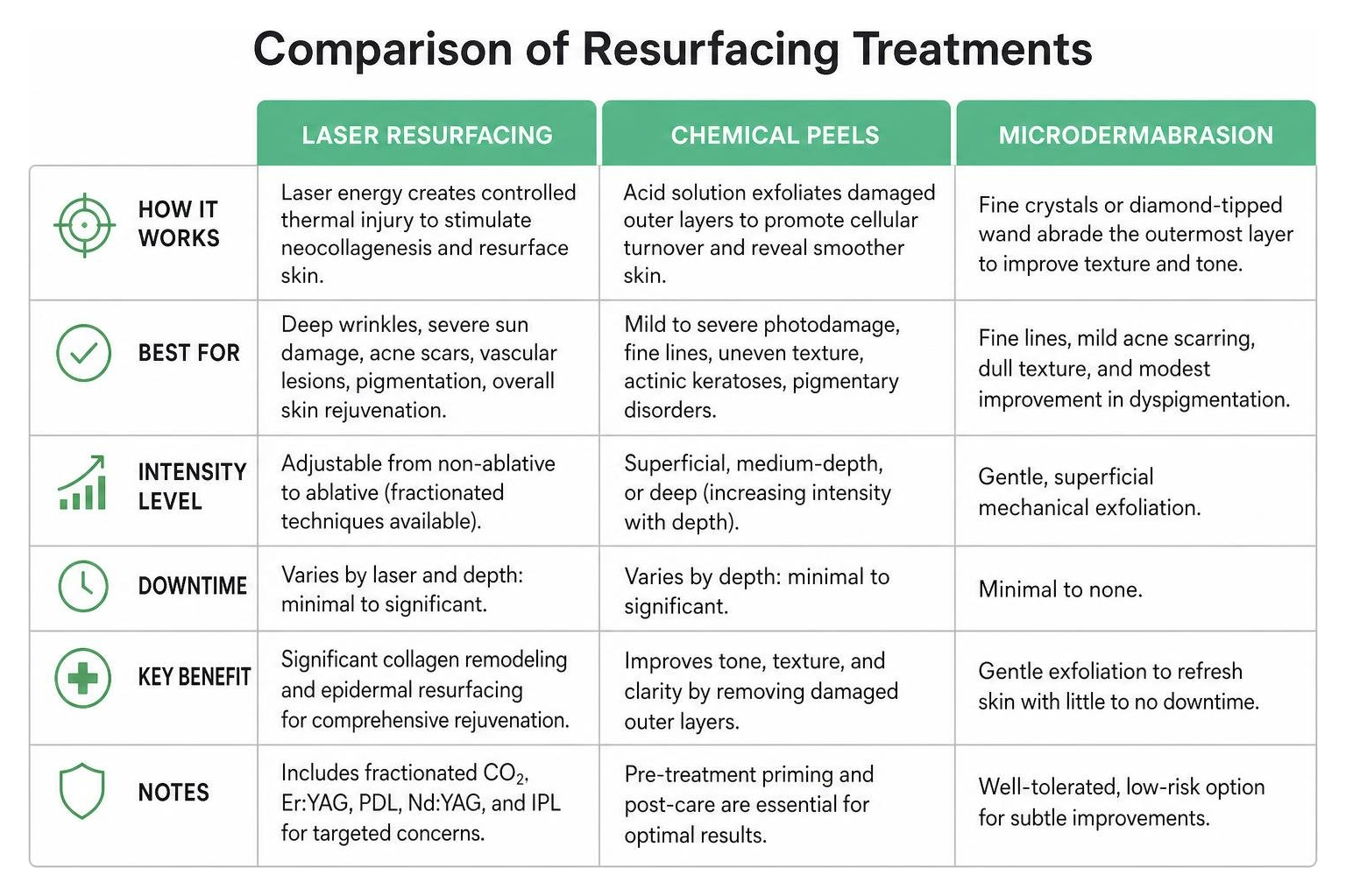
Laser resurfacing relies on the principle of selective photothermolysis, where specific chromophores (target molecules like water or melanin) in the skin absorb laser energy. This generates controlled thermal injury, prompting the body's natural healing response and stimulating neocollagenesis (new collagen formation). The choice of laser system and its parameters—such as wavelength, fluence, pulse duration, and spot size—are critical for targeting specific concerns while minimizing collateral damage.
- Fractionated CO2 and Er:YAG Lasers: These ablative lasers create microscopic columns of thermal injury, vaporizing tissue to stimulate significant collagen remodeling and epidermal resurfacing. They are highly effective for deep wrinkles, severe sun damage, and acne scars, with CO2 operating at 10,600 nm and Er:YAG at 2,940 nm. Fractionated technology allows for faster healing and reduced downtime compared to traditional ablative lasers.
- Pulsed Dye Lasers (PDL):Operating at wavelengths like 585-595 nm, PDLs target hemoglobin, making them ideal for vascular lesions such as telangiectasias (spider veins) and rosacea.
- Nd:YAG Lasers: With wavelengths like 1064 nm, these lasers can target deeper pigments and hair follicles, and are also used for skin toning and non-ablative rejuvenation.
- Intense Pulsed Light (IPL):While not a true laser, IPL uses broad-spectrum light to target multiple chromophores simultaneously, addressing pigmentation, redness, and overall skin texture.
Chemical Peeling and Mechanical Exfoliation
Chemical peels involve applying an acidic solution to the skin to exfoliate damaged outer layers, promoting cellular turnover and revealing smoother, more radiant skin. The depth of the peel determines its intensity, indications, and recovery time.
- Superficial Peels: Using agents like glycolic acid, these peels address mild photodamage, fine lines, and uneven texture with minimal downtime.
- Medium-Depth Peels: Often employing trichloroacetic acid (TCA), these penetrate deeper to treat moderate wrinkles, actinic keratoses, and pigmentary disorders. Pre-peel skin priming with retinoids and sunscreens is often recommended to optimize results and reduce complications.
- Deep Peels: Historically using phenol, these are reserved for severe photodamage and deep wrinkles but carry higher risks and require significant downtime.
Mechanical exfoliation, such as controlled microdermabrasion, offers a gentler approach. This procedure uses fine crystals or a diamond-tipped wand to abrade the outermost layer of the skin. It is suitable for modest improvements in fine lines, acne scarring, and skin texture, particularly for patients seeking a low-downtime, low-risk option. Microdermabrasion stimulates collagen remodeling through controlled mechanical abrasion, and studies report 5-15% improvement in dyspigmentation. Post-peel re-epithelialization and diligent post-procedure care are crucial for all resurfacing treatments to ensure proper healing and prevent complications like post-inflammatory hyperpigmentation.
Advanced Clinical Modalities and Spa Therapies
Beyond resurfacing, other advanced technologies offer non-invasive ways to lift, tighten, and sculpt the face without surgery. These modalities focus on stimulating collagen, reducing localized fat, and improving overall skin health.
Collagen Stimulation and Needle-Free Technologies
- Microfocused Ultrasound (MFU): Technologies like Ultherapy use focused ultrasound energy to target specific depths within the skin, including the superficial muscular aponeurotic system (SMAS) layer. This creates thermal coagulation points, initiating a natural healing response that leads to neocollagenesis and tissue tightening, resulting in a visible lift of jawline contours and refinement of the facial oval. Clinical data has shown improvements, such as a 6% refinement in jawline contour in just four weeks with certain plant stem cell technologies.
- Radiofrequency (RF) Tightening: RF devices deliver controlled heat to the deeper dermal layers, stimulating existing collagen and elastin fibers while promoting new collagen production. This results in gradual skin tightening and improved elasticity, effective for mild to moderate skin laxity.
- Submental Cryolipolysis: For targeted fat reduction, particularly under the chin (submental area), cryolipolysis (e.g., CoolSculpting) selectively freezes and destroys fat cells (adipocytes) without harming surrounding tissues. Clinical studies have shown average volume reductions ranging from 14.67% to 28.5% (measured by calipers) and 10.3% to 25.5% (measured by ultrasound). While rare, a potential complication known as paradoxical adipocyte hyperplasia has a reported incidence ranging from 0.025% to 0.78%.
Many clinics and wellness centers also offer a range of luxury day spa treatments that complement these advanced modalities. These can include micro-current stimulation for muscle toning, lymphatic drainage massages to reduce puffiness, and deep hydration infusions that deliver potent serums into the skin. While often less intensive than medical procedures, these therapies contribute to overall skin health, relaxation, and can enhance the results of more aggressive treatments.

Surgical Solutions for Deep Structural Restoration
For individuals with significant skin laxity, profound volume loss, or deep structural changes that non-invasive methods cannot fully address, surgical solutions remain the gold standard for comprehensive facial rejuvenation. These procedures offer the most dramatic and long-lasting results by directly addressing underlying facial anatomy.
Surgical interventions, such as facelifts, neck lifts, and eyelid surgeries, involve meticulous manipulation of tissues, including the superficial muscular aponeurotic system (SMAS) for effective tightening and lifting. Volume redistribution, often achieved through fat grafting or implants, can restore youthful contours lost due to age-related bone and fat atrophy. Addressing deep tissue laxity requires the expertise of a skilled surgeon who can tailor procedures to individual needs, ensuring natural-looking outcomes that harmonize with the patient's overall facial structure. For those considering these transformative options, consulting with specialists in personalized facial rejuvenation surgeries is essential to develop a bespoke treatment plan that aligns with their aesthetic goals and anatomical considerations.
Long-Term Maintenance via Facial Rejuvenation and Skincare
Achieving optimal facial rejuvenation is not a one-time event; it's an ongoing journey that requires diligent long-term maintenance. Regardless of the chosen path—be it advanced skincare, non-invasive treatments, or surgical interventions—post-procedure care and consistent daily routines are paramount to preserving results and promoting sustained skin health.
Immediately following clinical procedures, proper barrier recovery is critical. This often involves specific post-procedure care protocols, including gentle cleansing, specialized moisturizers, and strict sun protection to facilitate healing and prevent complications. Once the initial healing phase is complete, maintenance protocols become the cornerstone of longevity. This typically includes a continuation of high-quality, evidence-based skincare products, regular follow-up appointments for touch-up treatments (e.g., periodic chemical peels, laser sessions, or injectables), and a healthy lifestyle. The synergy between professional treatments and a consistent home skincare regimen creates a powerful strategy for aesthetic longevity, ensuring that the skin remains vibrant, resilient, and youthful for years to come. Regular clinical skin analysis and rejuvenation assessments help fine-tune these protocols as skin needs evolve.
Frequently Asked Questions About Facial Rejuvenation
What is the primary mechanism behind laser resurfacing?
The primary mechanism behind laser resurfacing is selective photothermolysis. This process involves the precise targeting of specific chromophores (such as water or melanin) within the skin by a particular laser wavelength. When the laser energy is absorbed by these targeted chromophores, it generates controlled thermal injury to the tissue. This controlled damage then triggers the body's natural wound healing response, leading to the stimulation of neocollagenesis, which is the formation of new collagen, and the remodeling of existing collagen, ultimately improving skin texture, tone, and reducing wrinkles.
How do chemical peel depths determine recovery and clinical outcomes?
The depth of a chemical peel directly correlates with its recovery time and clinical outcomes. Superficial peels, typically using agents like glycolic acid or low-concentration salicylic acid, target the outermost layer of the epidermis. They offer minimal downtime (often just a few days of mild flaking) and are best for improving mild skin discoloration, fine lines, and overall texture. Medium-depth peels, often utilizing trichloroacetic acid (TCA), penetrate deeper into the epidermis and upper dermis. These peels require a longer re-epithelialization time (typically 5-7 days of significant peeling and redness) and are effective for treating moderate wrinkles, sun damage, and some acne scars. They carry a higher risk of post-inflammatory hyperpigmentation, especially in darker skin tones, necessitating careful patient selection and pre- and post-care. Deep peels, historically using phenol, penetrate to the deeper dermis, offering dramatic results for severe wrinkles and sun damage but with extended recovery periods (weeks to months) and higher risks, including scarring and permanent pigment changes.
When is non-invasive skin rejuvenation preferable to surgical intervention?
Non-invasive skin rejuvenation is generally preferable to surgical intervention when individuals present with mild to moderate skin laxity, textural irregularities, or early signs of aging. It is also an excellent choice for preventative care, helping to maintain skin quality and delay the need for more aggressive treatments. Patients who prioritize minimal procedural downtime, lower risks, and a gradual, natural-looking improvement often opt for non-invasive modalities. These treatments are ideal for those who wish to avoid the incisions, anesthesia, and longer recovery associated with surgery, or for younger individuals who do not yet require the significant structural changes that only surgery can provide.
Conclusion
The landscape of facial rejuvenation and skincare in September 2026 is rich with innovation, offering a sophisticated array of options to address the multifaceted nature of skin aging. From understanding the intricate biological science of cellular longevity and epigenetic reprogramming to leveraging advanced non-invasive technologies and, when necessary, surgical precision, a comprehensive approach is paramount.
Achieving lasting skin vitality involves a personalized strategy that integrates daily clinically-proven skincare products, targeted non-invasive treatments, and potentially deeper structural restoration. By focusing on cellular health, supporting the skin barrier, and committing to long-term maintenance protocols, individuals can embark on a journey towards sustained aesthetic synergy, ensuring their skin not only looks younger but functions with renewed resilience and radiance.
- Comprehensive Approaches to Facial Rejuvenation and Skincare - October 19, 2026
- How Salt Lake City, Utah Businesses Can Build Network Resilience for Weather, Growth, and Hybrid Work - October 18, 2026
- How to Plan a Bathroom Remodel for Safer Movement and Easier Cleaning - October 18, 2026