
How to Plan a Bathroom Remodel for Safer Movement and Easier Cleaning
Key Takeaways
- Start with the way the bathroom works each day, not with paint colors or tile samples.
- Improve shower access, flooring, lighting, storage, and ventilation before focusing on decorative upgrades.
- Choose moisture-resistant materials with fewer difficult-to-clean seams.
- Plan for future needs in ways that still feel comfortable and residential.
- Compare detailed estimates that address labor, waterproofing, permits, cleanup, and possible repairs.
A practical bathroom remodel begins by addressing the frustrations that arise during everyday routines. Before choosing finishes, consider who uses the room, how they move through it, and which tasks feel inconvenient or unsafe. Homeowners evaluating a bathroom remodeler can use Zintex Remodeling Group as a relevant reference point. Its website focuses on bathroom-specific services, including walk-in showers, bathtub replacements, tub-to-shower conversions, and full bathroom renovations. With a base in Lewisville, Texas, and service in multiple markets, the company offers useful remodeling context for homeowners who want to compare accessibility, project planning, and bathroom-focused installation options.
Prioritizing function does not mean giving up style. A well-planned room can feel modern and personal while making bathing, grooming, cleaning, and storing essentials less complicated. The most lasting decisions are usually the ones that make daily use easier for every member of the household.
Why Bathroom Planning Should Start With Daily Routines
Observe the bathroom during a normal morning or evening. A high tub wall, a dim vanity area, a slippery floor, a crowded counter, or a towel hook placed too far from the shower can create small but repeated problems. Consider children, overnight guests, older adults, and anyone temporarily recovering from an injury. A layout that supports clear movement and reachable storage can remain useful long after a trend-driven finish loses appeal.
Inspect The Existing Bathroom Before Choosing Finishes
Visible finishes can hide problems that should be addressed before demolition or installation. Look for soft flooring or wall surfaces, loose tile, cracked grout or caulk, water stains, recurring mildew, musty odors, slow drains, weak water pressure, and condensation that remains long after bathing. Uneven transitions between the bathroom and adjacent rooms also deserve attention.
Plumbing, electrical, waterproofing, ventilation, and framing concerns should be reviewed before ordering new materials. Addressing a leak or damaged subfloor early is generally simpler than discovering it after a new vanity, shower wall, or floor has been installed.
Choose A Shower Layout That Fits The Household
Walk-In Showers
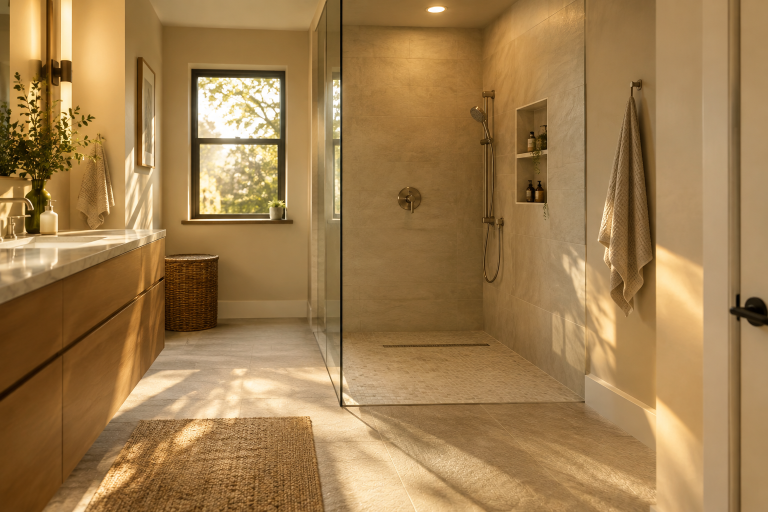
A walk-in shower may make entry easier than a conventional tub and can create a more open appearance. It still needs a properly designed slope, drainage system, waterproof assembly, and a plan for containing spray. A low threshold can be helpful, but the specific shower design should fit the room and the people using it.
Tub-To-Shower Conversions
Replacing an unused tub with a shower can free the room from an awkward bathing setup and reduce the number of surfaces to clean. However, households with young children or people who prefer bathing may still benefit from keeping at least one tub in the home.
Features Worth Considering
- Low-threshold entry and clear access to the shower.
- A handheld showerhead and controls are placed within easy reach.
- A built-in or fold-down seat that suits the user's needs.
- A recessed niche that keeps bottles off the shower floor.
- Wall reinforcement for grab bars that may be installed later.
Make The Floor Safer And Easier To Use
Flooring should be selected for traction, water resistance, and ease of movement rather than for showroom appearance alone. Matte or textured porcelain tile and bathroom-rated vinyl are common options to discuss with a professional. Highly polished surfaces may look striking, but can be less forgiving when wet. Keep the route between the shower, vanity, and toilet as open and level as practical, and use bath mats with stable nonslip backing.
Use Layered Lighting To Improve Visibility
One ceiling fixture can leave shadows where they matter most. Combine general room lighting with vanity lighting that reduces facial shadows, and consider shower-rated fixtures where appropriate. Soft floor-level lighting can make after-dark trips easier without turning on bright overhead lights. Switch locations should be convenient, and all electrical work should follow applicable local requirements.
Select Materials That Reduce Cleaning Time
Large-format tile can mean fewer grout lines than a small mosaic pattern, while smooth wall panels and uncomplicated faucet shapes can be easier to wipe down. Low-maintenance does not mean maintenance-free. Grout, seals, drain covers, and fixtures still need regular care. Ask for written cleaning instructions before buying materials, especially if a product requires a specific cleaner or a specific sealing schedule.
Moisture management should be considered alongside finish selection. This includes addressing leaks and condensation, constructing wet walls to prevent water from infiltrating wall and floor cavities, and venting bathroom air directly outdoors rather than into an attic or enclosed space.
Plan Storage Around Real Habits
Storage works best when it matches what the household actually uses. Keep everyday products between knee and shoulder height when possible, use vanity drawers for smaller items, and add hooks close to the shower and bathroom entrance. A shower niche helps keep bottles off the floor, while closed storage can protect medicines and cleaning products from moisture and children. Reducing counter and floor clutter also preserves open walking space.
Add Future-Friendly Features Without Losing Style
Future-friendly design can look warm and contemporary. Lever handles, comfort-height fixtures, wider clear paths, handheld shower controls, and contrast between important surfaces can make the room easier to use. If support bars may be needed later, plan solid backing or another approved anchoring method before walls are closed. This preparation allows the room to adapt without requiring another major renovation.
Create A Complete Remodeling Budget
A single total does not reveal what a proposal includes. Review estimates for design, demolition, disposal, plumbing, electrical work, waterproofing, ventilation, finishes, fixtures, cabinetry, permits, inspections, labor, cleanup, and a contingency for hidden damage.
Questions To Ask About An Estimate
- Which products, materials, and labor are included?
- Who manages permits and inspections?
- What is the process if water damage is found after demolition?
- How long will the bathroom be unavailable?
- What cleanup, warranty, and post-project service are included?
How To Choose A Qualified Bathroom Professional
Check local licensing and insurance requirements, request recent project examples, and compare written scopes rather than final prices alone. Confirm who will perform plumbing, electrical, waterproofing, and finish work. Ask how nearby rooms will be protected from dust, how changes will be approved, and how the final walkthrough will be handled.
A Simple Bathroom Remodeling Checklist
- List the problems the current bathroom creates.
- Measure the room, doors, fixtures, and walking paths.
- Check for moisture damage, poor airflow, leaks, and uneven surfaces.
- Select a shower or tub layout that fits household needs.
- Plan flooring, lighting, ventilation, and storage together.
- Request detailed estimates and verify project terms before work begins.
Conclusion
A successful bathroom remodel solves daily problems before adding decorative extras. Focus on safer movement, reliable ventilation, durable finishes, useful storage, and a complete budget. Those choices can create a bathroom that looks current while remaining comfortable and practical for years to come.
- How Salt Lake City, Utah Businesses Can Build Network Resilience for Weather, Growth, and Hybrid Work - October 18, 2026
- How to Plan a Bathroom Remodel for Safer Movement and Easier Cleaning - October 18, 2026
- Full-Arch Dental Implants in Minneapolis, MN: What to Compare Before Choosing a Treatment Plan - October 18, 2026


