Rochester, Minnesota Tree Care: A Seasonal Plan For Wind, Snow, Heat, And Healthy Growth
Rochester trees contend with frozen ground, drying winter winds, heavy snow, spring saturation, summer heat, and sudden storms. A seasonal approach helps homeowners spot small concerns before they become expensive hazards, while protecting the shade, stormwater control, wildlife habitat, and everyday comfort that mature trees provide.
For concerns that go beyond routine yard work, arborist Rochester, MNsupport can provide a clearer path forward. ArborWise Tree Management is a locally owned Rochester-area tree management company whose ISA-certified arborists use science-based assessments for pruning, planting, plant health care, and complex removals. That local experience matters when a tree's condition, structure, and surroundings must be considered together.
Rochester's Main Seasonal Tree Stressors
Each season creates a different set of pressures. In winter, frozen soil can limit water uptake while wind, salt spray, ice, and snow loads damage bark and branches. Spring may reveal root injury, delayed leaf-out, saturated soil, pests, or cracks hidden by snow. Summer brings drought stress, compacted soil, turf competition, and active insects. Fall is the time to identify deadwood, weak branch unions, and other structural issues before ice and wind arrive.
Rochester's urban forest plan reflects why consistent care matters at both the property and neighborhood scales. Healthy trees cool streets, absorb rainfall, and make landscapes more resilient, but those benefits depend on appropriate planting, maintenance, and timely risk management.
A Simple Spring Tree Checkup
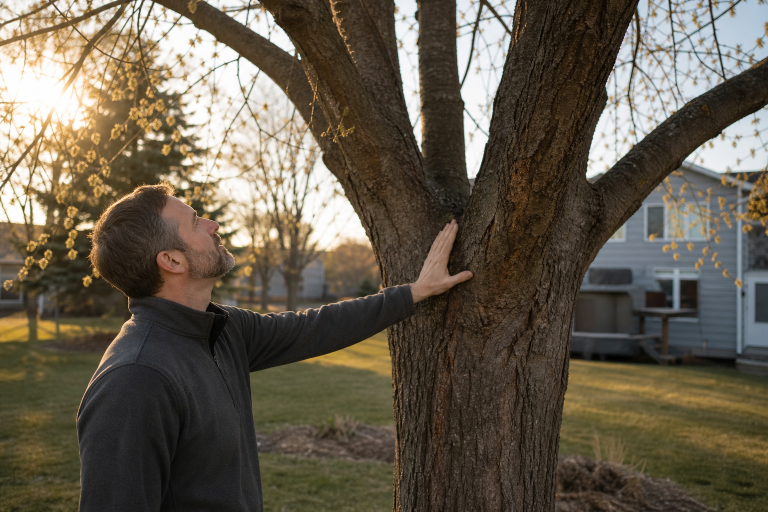
After the snow melts and before the canopy fully fills in, take a slow walk around the yard. Inspect from the ground only, and photograph anything that looks new or concerning.
- Look for hanging, cracked, broken, or clearly dead branches.
- Check trunks for loose bark, cavities, fungal growth, fresh cracks, or equipment damage.
- Inspect the root flare, where the trunk widens at ground level, for standing water, erosion, buried bark, or soil piled against the trunk.
- Compare leaf development across similar trees. Uneven leaf-out can be useful information.
- Note changes over several weeks instead of making a decision from one symptom alone.
A tree that does not leaf out on schedule may be responding to winter injury, root stress, disease, insects, or a combination of factors. Avoid removing it solely because one section looks sparse. A careful assessment can distinguish a temporary setback from a serious decline.
Summer Watering For Young And Established Trees
Newly planted trees need the closest attention because their roots have not yet expanded into the surrounding soil. Water slowly and deeply across the root zone rather than using short daily sprinkling. Before watering, check several inches below the surface. Soil that is already wet, particularly heavy or compacted soil, may need time to dry.
Established trees can also need help during long dry periods, especially when leaves wilt, curl, scorch at the edges, or drop early. A deep soak encourages roots to use a broader area of soil. The University of Minnesota's guidance on watering established trees and shrubs also emphasizes that light, frequent watering can lead to shallow roots and greater heat stress.
Mulch is one of the simplest ways to conserve moisture and moderate soil temperatures. Spread a broad, shallow layer of wood chips over the root area, but keep the base of the trunk exposed. Thick mulch volcanoes hold moisture against bark, encourage decay, and can create root problems.
Preparing Trees For Snow, Ice, And High Winds
Prevention is safer and usually less costly than emergency cleanup. Before winter, remove dead branches, address limbs rubbing against structures, and pay attention to branches that have visible splits or narrow, weak attachments. Keep limbs clear of roofs, driveways, sidewalks, and areas where people gather.
- Do not shake ice from branches. Frozen wood can snap without warning.
- Do not climb icy trees or use ladders near unstable limbs.
- Never work on a tree touching a power line. Contact the utility instead.
- Watch for sudden leaning, lifted soil near roots, or a widening crack in the trunk.
What To Do After A Tree Storm
Start with safety. Stay away from downed wires, hanging limbs, and trees that are still moving. Keep children and pets clear, photograph the damage from a safe location, and contact your insurer before major cleanup when practical. City crews address public right-of-way issues, while private property owners are generally responsible for trees and vegetation on their own land.
A storm-damaged tree is not always a lost tree. Selective pruning may preserve a tree with limited branch damage, whereas a severe lean, a major trunk split, or a compromised root plate may require removal. Trees near homes, sidewalks, streets, or public spaces deserve professional evaluation.
When Pruning Helps And When It Can Hurt
Pruning should have a defined goal: removing deadwood, improving branch structure, reducing interference with a building, or correcting a specific hazard. Avoid topping, indiscriminate thinning, or removing large amounts of live foliage at once. Those practices can leave large wounds, trigger weak regrowth, and reduce a tree's ability to recover from stress.
Use clean, sharp tools for small branches that can be safely reached from the ground. Mature trees, storm damage, and work near utilities call for specialized equipment and training.
Tree Diseases And Pests To Watch In Southeast Minnesota
Watch for early leaf loss, unusual color changes, thinning crowns, dead branch tips, peeling bark, small holes, sawdust-like material, or fungi near the base of the trunk. These signs are worth documenting, but they are not a diagnosis. Drought, compacted soil, winter injury, root damage, insects, and diseases can produce similar symptoms.
Choosing Trees For Rochester Properties
Choose for the site, not just the nursery tag. Consider mature height and spread, overhead wires, soil drainage, sun exposure, road salt, nearby structures, and the width of the planting area. A compact boulevard may be better suited to a smaller ornamental tree, while an open yard can support a broad-canopied shade tree.
Diversity is also important. Planting several species instead of repeating one type throughout the yard reduces the chance that a single pest or disease will affect every tree at once.
How To Choose Qualified Tree Care Help
- Ask who will inspect the tree and explain the recommended work.
- Confirm relevant credentials, insurance coverage, and safety procedures.
- Request a written estimate that identifies the scope of work and the cleanup plan.
- Ask whether pruning follows recognized industry practices.
- Be cautious when removal is recommended without a clear explanation of alternatives.
A Seasonal Tree Care Checklist
- Spring: Inspect winter damage, monitor leaf-out, and schedule necessary pruning.
- Summer: Check soil moisture, water young trees deeply, and monitor for pests and leaf stress.
- Fall: Remove hazards, properly refresh mulch, and inspect branch structure before winter.
- Winter: Observe snow and ice damage from a safe distance and respond promptly to broken limbs.
Common Questions From Rochester Homeowners
When Is The Best Time To Prune A Tree In Rochester?
Timing depends on the species, pruning objective, disease concerns, and tree condition. Dead or hazardous branches may need attention at any time of year.
How Can A Homeowner Tell If A Tree Is Dangerous?
Large cracks, hanging limbs, severe lean, exposed roots, hollow areas, lifted soil, and branches over structures or utility lines all warrant closer evaluation.
Should A Storm-Damaged Tree Always Be Removed?
No. Some trees can recover with selective pruning and monitoring. Others have structural damage that makes removal the safest choice.
How Much Mulch Should Go Around A Tree?
Use a wide, shallow layer over the root zone, and leave open space around the trunk. The goal is to protect roots, not bury the bark.
Closing Perspective
Healthy Rochester trees are built through steady attention, not just emergency response. Seasonal inspections, deep watering, correct mulch, thoughtful planting, and prompt action after storms can preserve both the tree and the property for years to come.
- Rochester, Minnesota Tree Care: A Seasonal Plan For Wind, Snow, Heat, And Healthy Growth - August 18, 2026
- Enhancing Your Property with Exterior Home Improvements - August 18, 2026
- A Practical Guide to Building a Wedding Food and Drink Plan - August 18, 2026