Enhancing Your Property with Exterior Home Improvements
Introduction

The outside of your home is its first impression, whether seen online or in person. This initial view does more than just look good; it significantly impacts your property's value. As we approach August 2026, homeowners are increasingly focusing on these impactful upgrades.
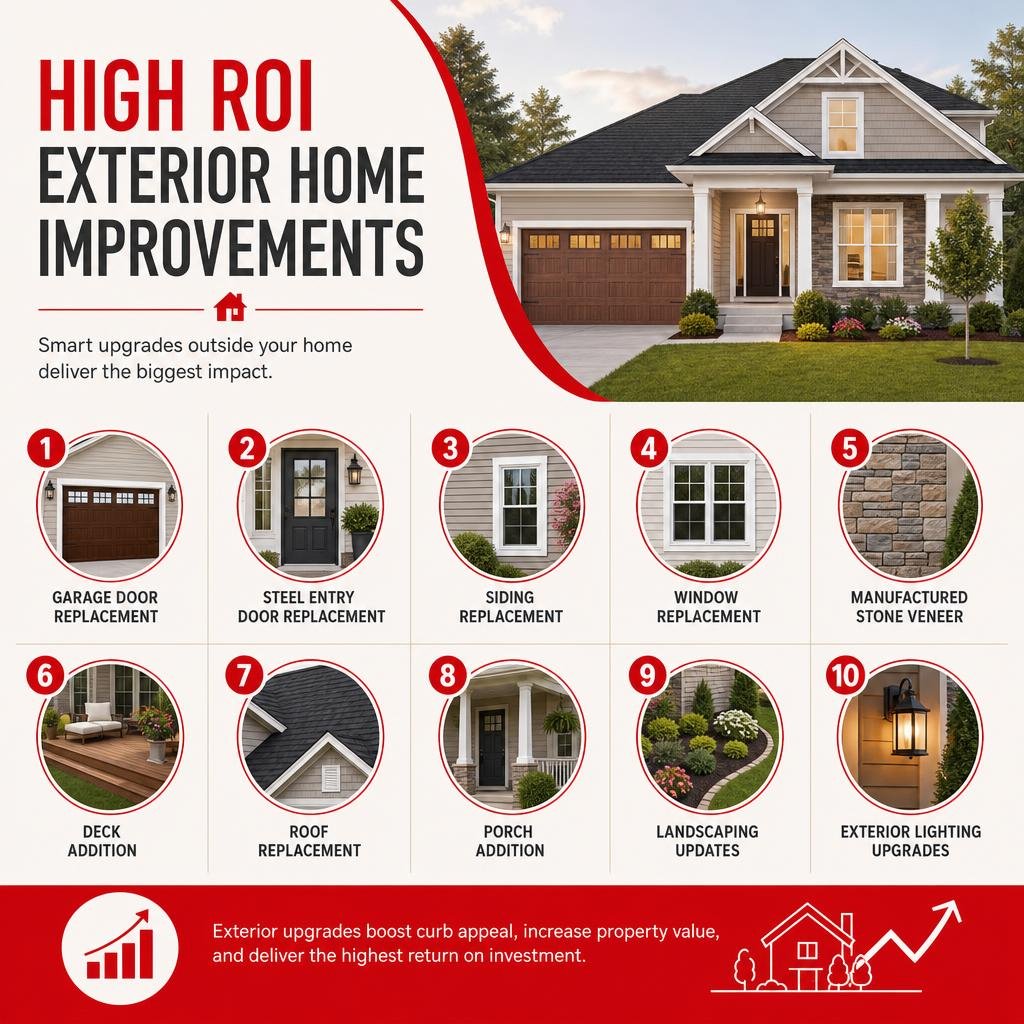
We know that boosting curb appeal is vital, especially when selling. A well-maintained exterior suggests a well-cared-for interior, building trust with potential buyers. These improvements protect your investment and can even shorten the time your home spends on the market. In fact, eight of the ten home improvements with the highest return on investment (ROI) are on the outside of the house.
In this extensive guide, we will explore the most valuable exterior home improvements that increase resale value and offer high returns. We will cover options for every budget, discuss how to choose the right materials for your climate, and guide you on hiring the best professionals. Working with an experienced exterior contracting company can ensure these projects are done right, maximizing your home's potential.
High-ROI Exterior Home Improvements That Build Resale Value
When considering exterior home improvements, the goal is often twofold: enhancing daily living and maximizing resale value. Fortunately, many projects achieve both. Data consistently shows that upgrading certain exterior elements can yield impressive returns, often surpassing internal renovations. For instance, a new garage door or a steel entry door can dramatically improve a home's first impression, leading to a valuation boost and stronger buyer interest.
These projects aren't just about aesthetics; they signal to potential buyers that the home has been well-maintained and is ready for its next owner. Fiber cement siding and asphalt shingle roofing, while significant investments, offer substantial returns by protecting the home's structural integrity and modernizing its appearance. These upgrades contribute to positive buyer impressions and are frequently cited in property appraisals as key value drivers.
Replacing Roofing and Siding for Weather Resistance
The roof and siding are your home's primary defenses against the elements. An aging or damaged roof can lead to leaks, structural issues, and poor energy efficiency, making it a significant red flag for buyers. Replacing an asphalt shingle roof, while a considerable investment (averaging $30,600 nationally), still garners a 57% return on investment, or about $17,400. More importantly, 72% of buyers consider a watertight roof very important. Alternatives like cedar shake can offer a distinct aesthetic, though they often require more maintenance.
Similarly, siding replacement is crucial for both protection and curb appeal. Vinyl siding replacement, with an average national cost of $17,400, offers an 80% ROI ($13,900). Fiber cement siding, like Hardie board, is especially valued, with 91% of builders agreeing it increases a home's appraisal value. It creates a robust exterior envelope, essential for resisting the severe freeze-thaw cycles common in Midwestern climates, preventing moisture intrusion, and maintaining insulation integrity. Investing in quality roofing and siding ensures weather tightness and long-term structural defense.
Upgrading Garage and Entry Doors for High Returns
Perhaps surprisingly, some of the highest ROIs come from relatively straightforward door replacements. A garage door replacement, with an average cost of $4,500, boasts an exceptional 194% ROI, recouping around $8,700. This improvement instantly updates a home's facade, offering a modern look and improved functionality.
Even more striking is the impact of a new steel entry door. Costing an average of $2,300, it can yield an impressive 188% ROI, returning approximately $4,400. Beyond the financial return, the front door is a focal point. Its color can even influence buyer offers; homes with black front doors, for example, have seen offers that are $6,450 more than similar homes without them. These upgrades provide a strong thermal seal, enhance security, and instantly boost curb appeal, making them smart investments for homeowners looking to sell.
Essential Structural Upgrades for Climate Resilience and Masonry
Beyond the visible surfaces, the underlying structure of your home requires attention, especially in regions prone to extreme weather. Masonry preservation and tuckpointing are critical for older brick homes, particularly in areas experiencing significant temperature fluctuations. Mortar deterioration can compromise the integrity of brick walls, allowing water intrusion and leading to structural damage. Regular brick repair and tuckpointing not only maintain the aesthetic appeal but also prevent costly future repairs by reinforcing the home's foundational strength.
Furthermore, addressing potential issues like ice dam prevention is vital for protecting your roof and gutters during harsh winters. Proper attic ventilation and insulation can mitigate ice dam formation, preventing water from backing up under shingles and into the home. These structural defenses are paramount for ensuring your home's long-term resilience against climate challenges.
Exterior Home Improvements for Midwest Winters and Rain
The Midwest climate, characterized by its severe freeze-thaw cycles, heavy snowfall, and abundant rain, demands specific considerations for exterior home improvements. Materials must be chosen for their ability to withstand these conditions. Historic masonry restoration, for instance, requires specialized knowledge to ensure that repairs blend seamlessly and offer lasting protection against moisture and temperature stress.
For roofing, while asphalt shingles are common, homeowners might consider alternatives like copper roofing for its exceptional durability and longevity, or TPO flat roofing for low-slope sections, known for its weather resistance. Regular spring roof inspections are crucial to identify and address any winter damage, such as loose shingles or compromised flashing, before they escalate into major issues. Ensuring effective rain protection through well-maintained gutters and downspouts is also key to preventing water damage to foundations and landscaping.
Installing Outdoor Living Spaces, Shade Structures, and Awnings
Expanding your home's usable space to the outdoors is a highly sought-after improvement in today's market. Outdoor living areas, such as decks and patios, significantly enhance lifestyle and property value. Adding a wood deck, for example, offers an average cost of $17,600 and an 83% return on investment. Composite decking provides a low-maintenance alternative, perfect for busy homeowners.

Beyond decks, integrating shade structures like pergolas, patio covers, or retractable awnings can transform an outdoor area into a comfortable oasis. These additions not only provide much-needed shade, regulating heat and making outdoor spaces more enjoyable, but they can also contribute to energy savings by reducing direct sunlight on windows and walls. For tailored solutions that perfectly match your home's aesthetic and functional needs, exploring options from providers of custom awnings and patio covers can be a valuable step. These features extend living space, boost curb appeal, and offer practical benefits like UV protection and reduced cooling costs during warmer months.
Comparing High-Value Materials for Long-Term Durability
Selecting the right materials for your exterior improvements is crucial for ensuring long-term durability, minimizing maintenance, and maximizing your investment. Climate endurance should be a primary factor, as different materials perform better under specific environmental stressors. For instance, in humid climates, materials resistant to mold and mildew are preferable, while in areas with harsh winters, freeze-thaw resistant options are key.
Siding longevity is a significant concern for homeowners. Fiber cement siding, often praised for its durability and resistance to rot, pests, and fire, stands out as a high-value option. Compared to vinyl siding, fiber cement generally offers a longer lifespan and can withstand more extreme weather conditions, though it typically comes with a higher upfront cost and more complex installation. Roofing defense also varies widely by material, with options ranging from traditional asphalt shingles to metal, tile, or slate, each offering different levels of protection and lifespan. Understanding the maintenance requirements for each material is vital for planning long-term care and budgeting.
Here's a brief comparison:
Feature Fiber Cement Siding Vinyl Siding Material Cement, sand, cellulose fibers Polyvinyl chloride (PVC) Durability Highly durable, resistant to rot, pests, fire, UV Durable, resistant to moisture and pests MaintenanceLow to moderate (periodic repainting) Very low (occasional cleaning) Lifespan 30-50+ years 20-40 years Cost Higher upfront Lower upfront Appearance Can mimic wood, stone; paintable Wide range of colors, textures; color is integral Climate Adapt.Excellent for extreme weather, high humidity Good for various climates, can crack in extreme cold ROI High (91% of builders agree it increases appraisal value) Good (80% ROI) Protective Exterior Home Improvements: Gutters, Windows, and Drainage
While often overlooked, the proper functioning of gutters, windows, and drainage systems is paramount for protecting your home from water damage and improving energy efficiency. Seamless gutters are a significant upgrade over traditional sectional gutters. By eliminating seams, they reduce the potential for leaks and debris accumulation, ensuring efficient water discharge away from your home's foundation. This protects fascia and soffit details from moisture damage and prevents basement water intrusion, a common and costly problem.

Drafty windows are notorious for energy loss, leading to higher utility bills and uncomfortable indoor temperatures. Replacing old, inefficient windows with modern, energy-efficient models can significantly improve your home's thermal performance. Vinyl window replacement, for instance, costs an average of $21,200 and offers a 67% ROI ($14,200). Beyond energy savings, new windows enhance curb appeal and reduce outside noise. Proper water management, including well-designed drainage and effective window and door flashing, is essential for mitigating moisture and preserving your home's structural integrity.
Best Practices for Selecting Exterior Contractors and Managing Projects
Embarking on exterior home improvements is a significant investment, and choosing the right contractor is paramount to the success and longevity of your project. The vetting process should be thorough, focusing on experience, reputation, and adherence to professional standards. Always verify that a contractor is licensed and insured, which protects you from liability in case of accidents or property damage during the work.
Local building codes and permits are not merely bureaucratic hurdles; they ensure that work meets safety and structural standards specific to your area. A reputable contractor will be knowledgeable about these requirements and handle the necessary paperwork. When discussing your project, ensure the contractor provides a clear and detailed work scope, outlining all materials, labor, and timelines. Ask about their warranty coverage for both materials and workmanship. For specialized projects or in specific regions, seeking out contractors with a proven track record, like those with experience in local Midwestern architecture and weather challenges, can be invaluable. Their expertise can guide material choices and installation techniques that are best suited for your home's unique needs and environment.
Frequently Asked Questions About Exterior Home Improvements
Should I repair or replace my roof before selling?
The decision to repair or replace your roof before selling largely depends on its current condition, age, and any visible issues. If your roof has active leaks, missing shingles, or is nearing the end of its lifespan (typically 20-25 years for asphalt shingles), a full replacement is often advisable. A new roof can be a significant selling point, as 72% of buyers consider a water-tight roof very important. It removes a major concern for potential buyers, builds trust, and can positively impact property appraisals. While a full asphalt shingle replacement has a 57% ROI, the peace of mind and faster sale it facilitates can outweigh the upfront cost. If the roof is relatively new and only has minor, localized damage, targeted repairs might suffice. However, be prepared for potential buyers to request a roof inspection, and any identified issues could become negotiation points.
How do local climate conditions affect exterior material choices?
Local climate conditions profoundly influence the optimal choice of exterior materials. In regions like the Midwest, characterized by severe freeze-thaw cycles, high humidity, and heavy precipitation, materials must be selected for their resilience. For instance, fiber cement siding is an excellent choice for its storm resistance and ability to withstand moisture without rotting or warping, unlike some wood products. Its dimensional stability makes it less prone to cracking during temperature extremes. Brick mortar, too, needs to be robust and properly installed to prevent deterioration from freeze-thaw cycles. For roofing, materials like metal or high-quality asphalt shingles designed for severe weather can offer superior protection against hail, strong winds, and heavy snow loads. In humid climates, materials with good ventilation properties and resistance to mold and mildew are critical. Always consult with local experts to understand which materials are best suited for your specific environmental challenges.
What quick cosmetic updates yield immediate curb appeal gains?
You don't always need a major renovation to dramatically boost curb appeal. Several quick cosmetic updates can make a significant difference with minimal expense. Painting your front door a high-impact color, such as black (which can increase offers by $6,450), instantly creates a focal point and refreshes the entry. Pressure washing all exterior surfaces—siding, brick, walkways, and driveways—can remove years of grime and instantly brighten your home's appearance. Upgrading outdoor lighting fixtures, especially near the entrance and along pathways, not only improves safety and visibility but also adds a sophisticated touch. Replacing outdated hardware like house numbers, mailboxes, and door handles can provide a modern, cohesive look. Finally, ensuring clean, well-maintained landscaping, including fresh mulch, trimmed bushes, and vibrant flowers, creates an inviting atmosphere that makes a strong first impression.
Conclusion
Investing in exterior home improvements is a strategic decision that pays dividends in both enhanced living and increased property value. From high-ROI projects like garage and entry door replacements to essential structural upgrades for climate resilience, each improvement contributes to your home's long-term equity. Prioritizing weather-resistant roofing and siding ensures structural integrity, while energy-efficient windows and well-managed drainage systems offer energy savings and property protection.
As we look to August 2026, the market continues to value homes that are well-maintained and thoughtfully updated. By understanding which improvements offer the best returns, choosing materials suited to your climate, and partnering with experienced professionals, you can transform your home's exterior into a powerful asset. A professional consultation can help you prioritize projects, ensuring your investments are both wise and rewarding.
- Rochester, Minnesota Tree Care: A Seasonal Plan For Wind, Snow, Heat, And Healthy Growth - August 18, 2026
- Enhancing Your Property with Exterior Home Improvements - August 18, 2026
- A Practical Guide to Building a Wedding Food and Drink Plan - August 18, 2026