A Practical Guide to Building a Wedding Food and Drink Plan
Key Takeaways
- Plan food around the full guest experience, from welcome drinks through the final snack.
- Match portions and service style to the event timeline, venue, and guest flow.
- Build a menu with clear variety, thoughtful dietary options, and drinks for every guest.
- Confirm staffing, rentals, weather logistics, and cleanup responsibilities well before the wedding.
A memorable reception menu is not simply a list of favorite dishes. It is a plan for keeping people comfortable, energized, and included throughout a long celebration. The best choices feel personal to the couple while remaining easy for guests to enjoy and practical for the event team to serve. For couples planning in southern Maine, wedding cateringfrom Rustic Taps & Catering offers a useful real-world example of what to evaluate: customizable farm-to-table food, mobile bar service, locally sourced ingredients, and event support based in Gorham with service extending within roughly an hour of Portland. A provider with experience coordinating food, drinks, staffing, and mobile setups can help turn a menu concept into a smoother guest experience.
Start With the Event, Not the Entrée
Begin with the basics: guest count, ceremony time, reception length, venue layout, season, budget, and overall mood. A formal evening celebration with assigned tables calls for a different food plan than a casual afternoon gathering where people will mingle outdoors. Consider where guests will wait, sit, move between spaces, and return to the dance floor. The menu should reflect your priorities, whether that means family recipes, Maine seafood, vegetarian comfort food, or a refined multicourse dinner. Still, every choice needs to work for the room, weather, kitchen access, and serving team.
Build the Food Timeline
Write down every food moment before choosing individual dishes: welcome drinks, cocktail-hour bites, dinner, dessert, and late-night snacks. The time of day matters, since brunch, lunch, and evening receptions create different expectations. A guide that connects the meal's style and weight to the reception hour can help couples make appropriate menu choices. Pay close attention to gaps. If guests arrive at 4:30 p.m. and dinner begins at 7:00 p.m., light passed canapés alone may not be enough. Add a more filling bite, such as a mini sandwich, skewer, flatbread, or small bowl, so hunger does not become the main topic of cocktail hour.
Choose a Service Style That Fits the Room
- Plated dinner: Polished and paced, but dependent on accurate meal counts and sufficient service staff.
- Buffet: Flexible and abundant, though it needs space, organized lines, and attention to mobility needs.
- Family-style: Warm and communal, but requires generous table space and coordinated replenishment.
- Food stations: Social and customizable, especially when stations are spread out to prevent bottlenecks.
- Heavy hors d'oeuvres: Works for shorter, cocktail-forward events when portions are truly substantial.
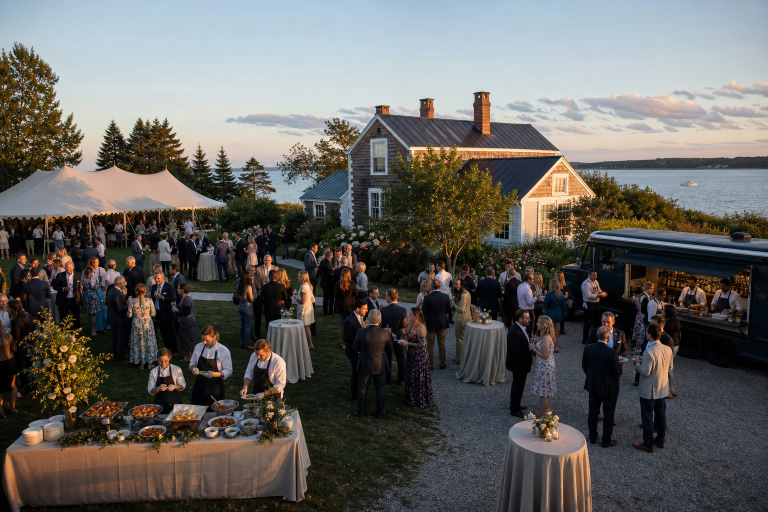
- Mobile or live-action service:Adds personality, such as a pizza truck for wedding celebrations, but requires room for parking, power, guest access, and a weather plan.
A mixed format often works beautifully. Passed appetizers can welcome guests, followed by a family-style dinner or stations that encourage conversation. Ask each caterer how the setup will work in your actual venue, not just in an ideal floor plan.
Plan a Cocktail Hour That Does More Than Fill Time
Cocktail hour gives guests something enjoyable to do while photos are finishing or rooms are transitioning. Offer easy-to-eat items, at least one more substantial option, and one fresh or lighter choice. Passed bites, grazing displays, and small stations can all work, but place food away from the bar so one queue does not become a crowd. Keep napkins, small plates, utensils, and ingredient labels close by. Labels are especially useful for spicy dishes, shellfish, nuts, and unfamiliar ingredients. Portions should increase when dinner is delayed, cocktail hour runs long, or alcohol service begins early.
Balance Flavor, Texture, and Choice
A polished menu does not need endless options. Instead, create a clear balance of rich and light foods, warm and chilled dishes, crisp and soft textures, plus familiar and distinctive flavors. A creamy entrée may pair well with a bright salad and roasted vegetables, while a hearty station menu benefits from a fresh seasonal element. Use the food to tell a small story. Include a family favorite, a dish inspired by a meaningful trip, ingredients from the season, or a regional specialty. During the tasting, judge the selections as a complete meal. Several delicious dishes can still feel too heavy, repetitive, or difficult to serve together.
Handle Dietary Needs Early and Clearly
Ask about allergies, intolerances, religious restrictions, and dietary preferences on the RSVP. Separate medical allergies from dislikes, then share the final list with the caterer early enough to plan safe preparation and service. Ask directly about cross-contact procedures, ingredient substitutions, and how special meals will be identified.
Sample RSVP Questions
- Do you have a food allergy or medical dietary requirement? Please describe it.
- Would you prefer a vegetarian, vegan, or gluten-free meal?
- Are there religious or alcohol-free dietary considerations we should know about?
Guests with dietary needs deserve a complete, satisfying meal, not a collection of side dishes. Discreet meal markers or place cards can help servers deliver the right plate without making anyone feel singled out.
Pair Drinks With the Menu
Plan beverages alongside food, including beer, wine, cocktails, mocktails, sparkling water, still water, coffee, and tea. A signature cocktail can add personality, but it should complement rather than replace familiar choices. Include at least one appealing non-alcoholic drink, such as a seasonal spritz, lemonade, iced tea, or alcohol-free mule. Think through bar placement, ice, glassware, hydration stations, and transportation. Your wedding website can also share useful food, drink, and timing details, since a clear wedding website FAQ page helps guests prepare for what the day will include.
Review the Caterer Before Booking
Ask practical questions before signing: How many servers and bartenders are included? Who handles setup, rentals, cleanup, deposits, service fees, and final counts? Can food be prepared on-site? What does the venue need to supply? For an outdoor event, confirm the rain plan, power requirements, parking access, ground conditions, lighting, refrigeration, and backup serving location. Also, ask when menu selections become final and how substitutions are handled if seasonal ingredients change.
Use a Final Menu Checklist
- Confirm the final guest count and all dietary notes.
- Approve meal, bar, dessert, and late-night service times.
- Verify non-alcoholic options, rentals, staffing, and vendor arrival times.
- Document the weather plan, setup location, and cleanup responsibilities.
- Share one final timeline with the planner, venue, caterer, photographer, and wedding party.
The strongest wedding food and drink plan feels generous, organized, and unmistakably yours. Judge it by the entire guest experience, from the first welcome drink to the final snack, and give every vendor the details needed to make the celebration flow naturally.
Conclusion
A successful wedding menu balances good food, guest comfort, and smooth service throughout the entire celebration. By planning the food timeline, choosing a service style that fits the venue, accommodating dietary needs, coordinating drinks, and confirming staffing, rentals, weather plans, and cleanup responsibilities early, couples can avoid unnecessary stress on the wedding day. Thoughtful menu planning also gives guests enough variety while keeping the meal practical for the catering team to prepare and serve. The best wedding menu is one that feels personal to the couple, works naturally with the event schedule, and keeps guests satisfied and comfortable from the first welcome drink and appetizer to dinner, dessert, and the final late-night snack.
- Rochester, Minnesota Tree Care: A Seasonal Plan For Wind, Snow, Heat, And Healthy Growth - August 18, 2026
- Enhancing Your Property with Exterior Home Improvements - August 18, 2026
- A Practical Guide to Building a Wedding Food and Drink Plan - August 18, 2026