How to Choose an Amber Perfume That Fits Your Style, Season, and Skin
Key Takeaways
- Amber is usually a perfume accord, not one single raw material.
- It can smell sweet, resinous, woody, spicy, floral, smoky, or soft and musky.
- Light amber styles can suit warm weather, while richer compositions often feel especially comfortable in cool conditions.
- Testing on skin and waiting for the dry-down is essential before buying a full bottle.
- Climate, application amount, and the notes around amber can change the overall effect.
Amber perfume is loved for warmth, depth, and versatility. It can feel like soft cashmere, polished wood, glowing resin, sweet vanilla, or a smoky evening scent, depending on the formula. Exploring niche amber perfumes can be a useful starting point for anyone who wants to experience the breadth of this fragrance family.
The best amber scent is not automatically the richest or sweetest one. It is the one that suits how you dress, where you wear fragrance, the weather around you, and the way the composition settles on your skin. Learning a few common amber styles makes sampling more focused and far less overwhelming.
What Amber Means in Perfumery
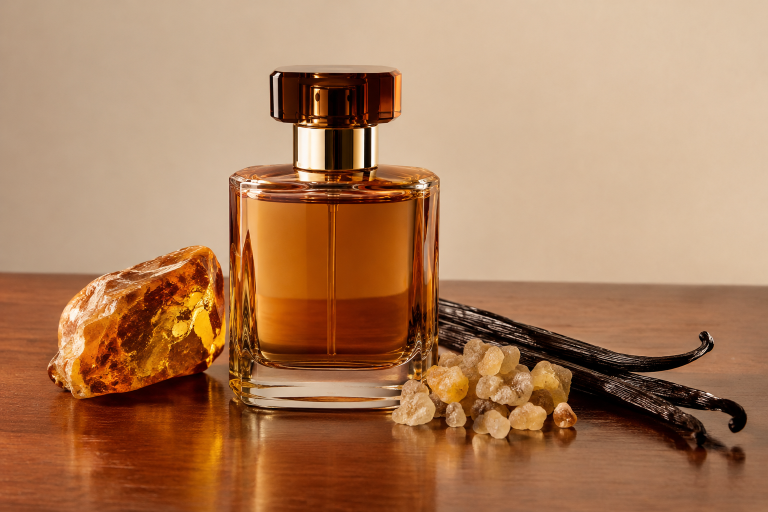
In fragrance, amber does not usually mean the golden fossilized resin used in jewelry. Natural amber is fossilized tree resin, while an amber perfume effect is generally created by blending several scent materials. Perfumers may use labdanum, benzoin, vanilla, balsams, woods, spices, musks, and modern aroma molecules to create a warm and lasting impression.
Because it is an accord rather than a fixed ingredient, amber has no single smell. One perfume may be creamy and dessert-like, another dry and woody, and another dark, smoky, or leathery. The notes surrounding the amber structure determine its personality.
The Main Amber Scent Profiles
Fragrance descriptions become easier to understand when amber perfumes are grouped by their dominant character.
- Sweet amber: Often combines amber with vanilla, tonka, honey, caramel-like facets, or soft balsams. This style feels cozy and inviting.
- Resinous amber: Built around materials such as labdanum and benzoin. It tends to feel deep, balsamic, and luminous.
- Woody amber: Uses cedar, sandalwood, patchouli, or dry modern woods for a clean, smooth, and polished result.
- Spiced amber: Includes notes such as cardamom, pepper, cinnamon, saffron, or clove. It often feels energetic and elegant.
- Floral amber: Blends flowers such as rose, jasmine, iris, or orange blossom into a warm base for softness and contrast.
- Smoky amber: May feature incense, leather, tobacco, dark woods, or charred effects for a more dramatic finish.
Why Amber Perfumes Smell So Different
Amber often serves as the foundation of a fragrance rather than the main spotlight note. A citrus opening can make it brighter. Vanilla can make it sweeter. Incense can make it drier and more contemplative, while rose or iris can give it a refined floral lift. The same amber base can therefore produce very different results.
Texture matters, too. Some amber perfumes are designed to stay close to the skin with a soft, enveloping feel. Others are built to project more clearly in the air. Neither approach is better, but they suit different settings.
Choosing Amber for Each Season
Seasonal fragrance rules are flexible, but weather can influence how a scent feels and how strongly it seems to radiate.
- Spring: Consider amber with citrus, green notes, gentle florals, or clean musks.
- Summer: Look for sheer amber paired with tea, fresh woods, light fruit, or airy spices. Use fewer sprays if heat makes the scent feel too dense.
- Fall: Try vanilla, suede, cinnamon, patchouli, resin, and dry wood combinations that complement cooler air.
- Winter: Explore deeper blends with incense, balsams, leather, tobacco, or tonka for a fuller and more enveloping effect.
Matching Amber to Personal Style
Your wardrobe and routine can offer useful clues. If you prefer crisp shirts, neutral colors, and minimalist accessories, a transparent woody amber may feel natural. If you enjoy velvet, bold jewelry, evening plans, or darker colors, resinous, spicy, or smoky amber may be more satisfying.
- Choose soft amber for understated daily wear and close settings.
- Choose woody amber for a clean, modern, put-together impression.
- Choose sweet amber for comfort, warmth, and a relaxed mood.
- Choose smoky amber for nighttime, special occasions, or colder weather.
How Climate Changes Amber on Skin
Heat can make a perfume seem stronger and can bring out sweet or spicy aspects more quickly. Cooler air may make the fragrance feel quieter at first, allowing the base notes to emerge more gradually. Humidity may also make a rich amber composition feel more noticeable. Start with a light application when testing in hot weather, then adjust based on comfort and projection.
How to Test an Amber Perfume Properly
- Spray a blotter first to identify the opening and general direction.
- Apply a small amount to a clean wrist or inner arm.
- Wait at least 30 minutes before deciding how you feel about it.
- Check it again after several hours to experience the dry-down.
- Note whether the remaining scent feels too sweet, too smoky, too faint, or just right.
Do not judge an amber perfume only by its first few minutes. Fresh top notes fade faster than the base notes, and amber often becomes smoother, warmer, and more cohesive over time.
Notes That Commonly Pair Well With Amber
- Vanilla: Adds creaminess and sweetness.
- Labdanum: Brings resinous, leathery depth.
- Benzoin: Creates a balsamic, softly sweet effect.
- Sandalwood: Adds a smooth, creamy wood character.
- Patchouli: Gives earthiness and shadow.
- Rose: Adds floral contrast and polish.
- Incense: Introduces dry, smoky depth.
- Musk: Helps create a softer, close-to-skin finish.
Amber Perfume and Layering
Layering can shift an amber fragrance without hiding its character. A fresh citrus scent can make it feel lighter, a floral scent can make it more elegant, and a simple vanilla or musk product can emphasize softness. Keep the experiment restrained. Apply the lighter fragrance first, then add a small amount of the richer amber scent.
Common Mistakes to Avoid
- Assuming every amber perfume smells sweet.
- Buying a full bottle after smelling only the opening.
- Applying several heavy fragrances in the same small area.
- Using the same number of sprays in extreme heat as in cold weather.
- Ignoring whether you want a skin scent or a stronger projection.
Frequently Asked Questions
Is amber a single perfume ingredient?
Usually not. Amber is commonly described as a blend of materials chosen to create warmth, depth, and persistence in a fragrance.
Can amber perfume be worn in summer?
Yes. Choose a lighter composition with citrus, tea, fresh woods, or musk, and apply it more sparingly in high temperatures.
Why does amber often last a long time?
Amber-style materials are frequently used in a perfume's base, where slower-changing notes can remain noticeable after fresher opening notes fade.
Final Thoughts
Amber offers a fragrance world rather than one fixed aroma. Whether you prefer soft woods, sweet vanilla, glowing resins, or smoky incense, sampling patiently will help you find a style that feels genuinely personal. Let the dry-down, your climate, and your own comfort guide the final choice.
- How Salt Lake City, Utah Businesses Can Build Network Resilience for Weather, Growth, and Hybrid Work - October 18, 2026
- How to Plan a Bathroom Remodel for Safer Movement and Easier Cleaning - October 18, 2026
- Full-Arch Dental Implants in Minneapolis, MN: What to Compare Before Choosing a Treatment Plan - October 18, 2026