
How to Compare St. Paul Neighborhoods Before Buying a Home in 2026
Table of Contents
- Start With a Personal Home-Buying Scorecard
- Compare Neighborhoods by Daily Routine
- Review Housing Styles and Property Conditions
- Look Beyond Listing Photos
- Study Local Market Data With Care
- Compare Lifestyle Priorities, Not “Best” Neighborhoods
- Check Costs That Do Not Appear in the List Price
- Research Schools, Services, and Future Changes
- Questions to Ask During a Showing
- Use a Simple Comparison List
- A Five-Step Decision Process
- Choose the Place That Supports Real Life
Finding the right home is only part of a successful purchase. Two properties with similar prices can create very different day-to-day experiences depending on their street, nearby services, commute, parking, housing condition, and seasonal upkeep. In St. Paul, neighborhood character can change quickly from one area to another, so buyers benefit from evaluating the location as carefully as the house itself.
For buyers weighing options across the city, St Paul MN real estate agent Adam Duckwall provides a useful local starting point. Adam Duckwall is a Twin Cities real estate specialist whose website includes home search tools, valuation resources, neighborhood information, and guidance for buyers and sellers. His experience serving St. Paul, Minneapolis, Roseville, Woodbury, Stillwater, and nearby communities can help buyers compare homes with both immediate needs and longer-term plans in mind.
Start With a Personal Home-Buying Scorecard
Before comparing neighborhoods, write down what a workable home purchase means for your household. This prevents a beautiful listing or a popular area from distracting you from the factors that matter most.
- Set a maximum monthly housing payment, including estimated taxes, insurance, and association dues.
- List your preferred home type, minimum number of bedrooms, square footage, and storage needs.
- Choose an ideal commute time to work, school, childcare, healthcare, or frequent destinations.
- Identify must-haves such as a garage, off-street parking, transit access, a yard, or nearby green space.
- Separate true needs from nice-to-have features.
- Consider whether the area will still fit in five to ten years.
Compare Neighborhoods by Daily Routine
A neighborhood should support the schedule you actually keep, not just the lifestyle you imagine. Map trips to work, school, grocery stores, medical appointments, family members, and favorite recreation areas. Test important routes during weekday traffic, not only on a quiet weekend afternoon.
Also consider walking, biking, and public transit options. In winter, a short trip can feel very different when snow, ice, limited visibility, and parking restrictions are involved. During visits, pay attention to sidewalk conditions, street width, snow storage, lighting, and whether parking appears realistic for your household and guests.
Review Housing Styles and Property Conditions
St. Paul offers an unusually broad mix of historic single-family homes, bungalows, duplexes, condos, townhomes, lofts, and newer infill construction. For a broad geographic and historical context, the Saint Paul city overview can help explain the city's river setting, varied neighborhoods, and development patterns. Use it as background only, not as a substitute for current property research.
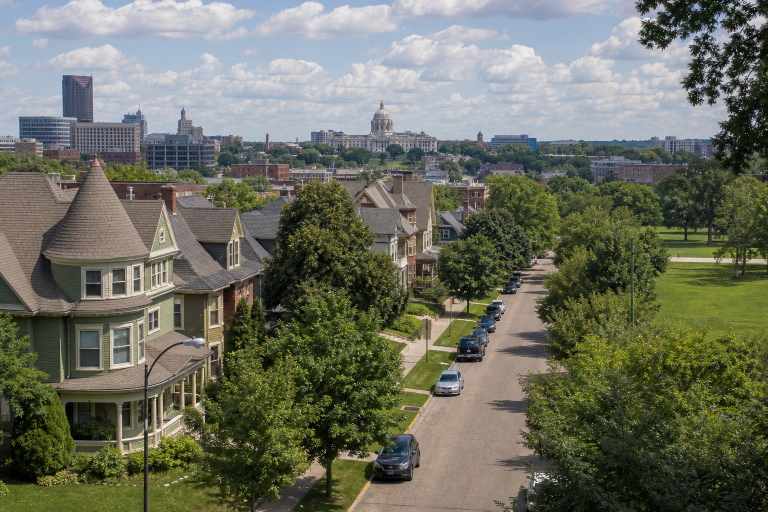
Older homes may offer character, mature trees, and established streets. Still, they can also require close attention to the ages of the roof, electrical panels, plumbing, heating systems, windows, drainage, and the foundation's condition. Condos and townhomes may reduce exterior maintenance, but association dues, reserve funds, pet rules, rental policies, storage, and parking can materially affect value. Newer construction may reduce immediate repair needs, although buyers should still inspect the home carefully.
Look Beyond Listing Photos
Use a repeatable field-check process for every neighborhood under consideration:
- Visit once during the morning commute.
- Return after work and again on the weekend.
- Walk several blocks in more than one direction.
- Note traffic, train or road noise, lighting, sidewalks, and nearby businesses.
- Check the actual distances to parks, libraries, grocery stores, and community spaces.
- Talk with residents when appropriate, while recognizing that one conversation is not the full picture.
Study Local Market Data With Care
Asking prices are not the same as market value. Compare recent closed sales, price per square foot, days on market, available inventory, and sale-to-list-price ratios. Look for patterns across enough similar homes to make the comparison meaningful. One unusual sale, a fully renovated property, or a distressed listing can distort a small sample.
Keep citywide trends separate from neighborhood-level data, and refresh your research shortly before making an offer. Housing conditions can shift, especially when inventory and mortgage rates change.
Compare Lifestyle Priorities, Not “Best” Neighborhoods
For Walkability and Local Dining
Buyers who value cafes, restaurants, shops, and public spaces may prefer areas where daily errands are closer together. The tradeoff can be smaller lots, tighter parking, more activity, or a higher cost for the location.
For Parks and Outdoor Time
Look beyond a general claim of “near parks.” Identify the specific trail, playground, river corridor, lake, or recreation area you expect to use. A park that is technically nearby may not be convenient if steep streets, busy roads, or winter conditions make it difficult to reach.
For Historic Character
Established streets, classic architecture, and mature landscaping can be appealing, but maintenance should be part of the budget. Older homes may need improvements that are less visible during an initial showing.
For Low-Maintenance Living
Condo and townhome buyers should read association documents, budgets, reserve studies, meeting notes, insurance details, and any notice of special assessments before making an offer.
Check Costs That Do Not Appear in the List Price
A lower purchase price does not always mean lower ownership costs. Compare the full monthly and long-term picture:
- Property taxes and homeowners' insurance.
- Heating, cooling, water, and electricity costs.
- Association dues and potential special assessments.
- Snow removal, lawn care, roof work, and exterior repairs.
- Parking costs, garage repairs, or future garage construction.
- Permit requirements and likely costs for planned remodeling.
Research Schools, Services, and Future Changes
Use official school district sources for attendance boundaries and enrollment information. Check city resources for parks, libraries, permits, transportation, and planned projects. The City of Saint Paul's neighborhood investment updates are one example of public information that can reveal where business, arts, and community investments are occurring.
Planned road work, new housing, transit improvements, and commercial development can bring benefits but may also lead to construction, traffic, or land-use changes. Review what is proposed near the property instead of relying on assumptions.
Questions to Ask During a Showing
- How old are the roof, furnace, air conditioner, and water heater?
- What repairs or upgrades were completed in the last five years?
- Are there known water, drainage, sewer, or foundation concerns?
- How does winter street parking work?
- What are the typical utility costs?
- Are there planned assessments, zoning changes, or nearby construction projects?
Use a Simple Comparison List
Create one set of notes for each neighborhood and score the same factors: typical home styles, realistic price range, commute time, transit, park access, shopping, dining, parking, estimated taxes and insurance, likely repairs, and long-term lifestyle fit. A consistent list makes tradeoffs easier to see.
A Five-Step Decision Process
- Choose three to five neighborhoods that meet your budget and main lifestyle needs.
- Visit each area at different times of day.
- Compare total ownership costs, not just list prices.
- Review current sales and inventory data before making an offer.
- Test whether the neighborhood works if work, household size, or routines change.
Choose the Place That Supports Real Life
The best St. Paul neighborhood is not necessarily the most talked-about or the lowest-priced. It is the one that supports your budget, routines, comfort, and plans. Avoid relying on outdated data, skipping inspections, or assuming every block within a larger area feels the same. A careful comparison of location, condition, costs, and daily life can lead to a more confident home-buying decision in 2026.
- Emergency Readiness for Older Adults: A Practical Plan for Living Independently - August 11, 2026
- RV Park for Contractors in Upstate South Carolina: A Practical Guide to Shibby RV Living - August 11, 2026
- When to Call for Emergency Plumbing Services - August 11, 2026


