
The Benefits of Participating in High School JROTC Programs
Key Takeaways
- JROTC enhances academic performance and discipline.
- It promotes physical fitness and teamwork.
- Students develop leadership skills applicable in various careers.
- Participation can lead to scholarship opportunities and advanced military enlistment ranks.
Table of Contents
- Improved Academic Performance
- Enhanced Physical Fitness
- Development of Leadership Skills
- Engagement in Extracurricular Activities
- Fostering Responsible Citizenship
- Strengthening College Applications
- Access to Scholarships
- Advancement in Military Careers
- Character Development
- Exploration of Career Pathways
Participating in Junior Reserve Officers' Training Corps (JROTC) offers high school students a transformative opportunity to blend academic achievement, leadership training, and physical fitness in a structured environment. These programs are uniquely positioned to develop essential life skills, opening doors to future educational and career pathways. Students and parents researching Junior ROTC near me often discover that these initiatives provide far-reaching benefits beyond the classroom, fostering discipline, civic responsibility, and lifelong confidence.
JROTC programs, through a combination of rigorous coursework, community service, and hands-on leadership roles, prepare young adults for both military and civilian futures. Whether a student dreams of attending college, pursuing a military career, or exploring other professional options, participation in JROTC can be a powerful stepping stone. The skills gained in these programs are not only recognized by educational institutions but also by employers and service organizations nationwide.
Improved Academic Performance
One of the most measurable benefits of JROTC is its positive impact on academic performance. Numerous studies show that JROTC participants are more likely to achieve higher grade point averages compared to their peers. The program’s structured environment encourages consistent goal-setting, time management, and prioritization, skills that directly translate into better study habits and improved grades. The discipline fostered in JROTC often leads to increased classroom participation and reduced absenteeism, helping students stay on track academically.
Enhanced Physical Fitness
Physical training is a key pillar of the JROTC experience. Cadets participate in regular fitness sessions focused on strength, endurance, and flexibility, often collaborating on team-based challenges that promote camaraderie. These workouts, along with optional participation in adventure activities and competitive events, not only improve physical health but also teach goal-setting, perseverance, and the value of teamwork. The foundation for a healthy lifestyle is often set during these formative years. Extensive coverage on youth fitness and the importance of physical education can be found through the Centers for Disease Control and Prevention's Healthy Schools initiative.
Development of Leadership Skills
The JROTC curriculum emphasizes leadership, teaching cadets to take initiative and make balanced decisions. Participation involves rotating through leadership roles, managing peers, and sometimes leading large groups in activities. Cadets learn effective communication, responsibility, and how to guide others toward a common objective. These competencies are transferable not only to military environments but also to business, education, and other civilian careers. Graduates of JROTC are frequently recognized for their self-discipline and accountability, qualities sought after in every field.
Engagement in Extracurricular Activities
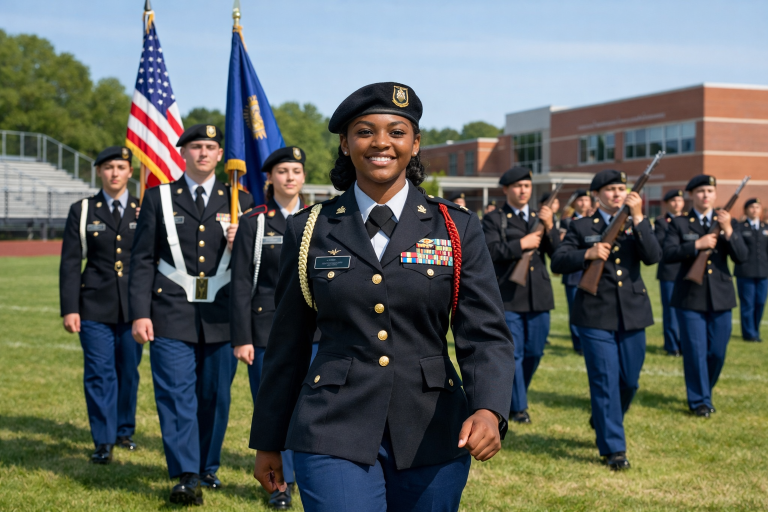
JROTC extends far beyond the classroom, offering students the chance to join specialized teams such as drill, orienteering, and color guard. These extracurricular opportunities allow cadets to develop leadership skills in real-world scenarios, foster a sense of community, and gain exposure to diverse experiences. Competitions and team events often build friendships and practical problem-solving skills, giving cadets a well-rounded high school experience. For a broader look at student benefits from extracurricular participation, see insights from Edutopia’s article on the enduring importance of extracurriculars.
Fostering Responsible Citizenship
JROTC programs integrate community service and civic education, instilling a strong sense of responsibility toward society. Cadets are regularly involved in service-learning efforts, such as volunteering for disaster relief, food drives, or local clean-up projects. These activities teach the importance of giving back, reinforcing values like respect, integrity, and dedication to the common good. As a result, JROTC graduates often emerge as leaders in their communities, prepared to take on civic roles.
Strengthening College Applications
Colleges and universities recognize the rigorous training and leadership development provided by JROTC. Admissions committees often view cadet participation as evidence of a student’s dedication, time management, and ability to balance multiple responsibilities. The unique experiences and references gained from JROTC instructors and leadership roles can help make applications stand out in a competitive admissions landscape.
Access to Scholarships
Participation in JROTC opens the door to a variety of scholarships, particularly for students who choose to continue their involvement in college-level ROTC. Many universities offer significant financial incentives and awards to former JROTC cadets, making higher education more accessible and affordable. Beyond ROTC-specific aid, involvement in JROTC can also help cadets qualify for merit-based and leadership scholarships from a range of organizations.
Advancement in Military Careers
JROTC provides a significant advantage to those considering military service after graduation. Students who complete at least two years in the program may enter the armed forces at a higher enlistment rank, translating into better pay and faster advancement. The leadership, discipline, and familiarity with military customs gained in JROTC ease the transition to boot camp and professional roles within the armed services, setting cadets apart from other recruits.
Character Development
At its core, JROTC is dedicated to character building, instilling in students the foundational values of loyalty, duty, respect, and integrity. These ideals shape everyday decision-making, personal relationships, and professional conduct. Cadets learn to handle challenges ethically and with resilience, preparing them for the uncertainties and opportunities of adulthood.
Exploration of Career Pathways
The expertise developed in JROTC is not limited to military careers. Skills in leadership, teamwork, and problem-solving are valuable across a variety of sectors, including science, law, business, public service, and engineering. The program provides guidance for students exploring different professional options, helping them match their strengths and interests to rewarding career paths.
JROTC participation is a life-enriching experience that builds lasting confidence, discipline, and purpose. The wide-ranging skills, leadership training, and civic values fostered by the program make it one of the most impactful opportunities available to high school students today.
- Understanding Plumbing Challenges and Solutions in Rogers, Arkansas - July 24, 2026
- Dental Implants in Rapid City, SD: Restoring Smiles for the Community - July 24, 2026
- Innovative Vision Solutions for the Modern Era - July 22, 2026


