Stress-Free Travel Logistics: Reliable Transportation and Parking Solutions
The Core Components of Modern Travel Logistics
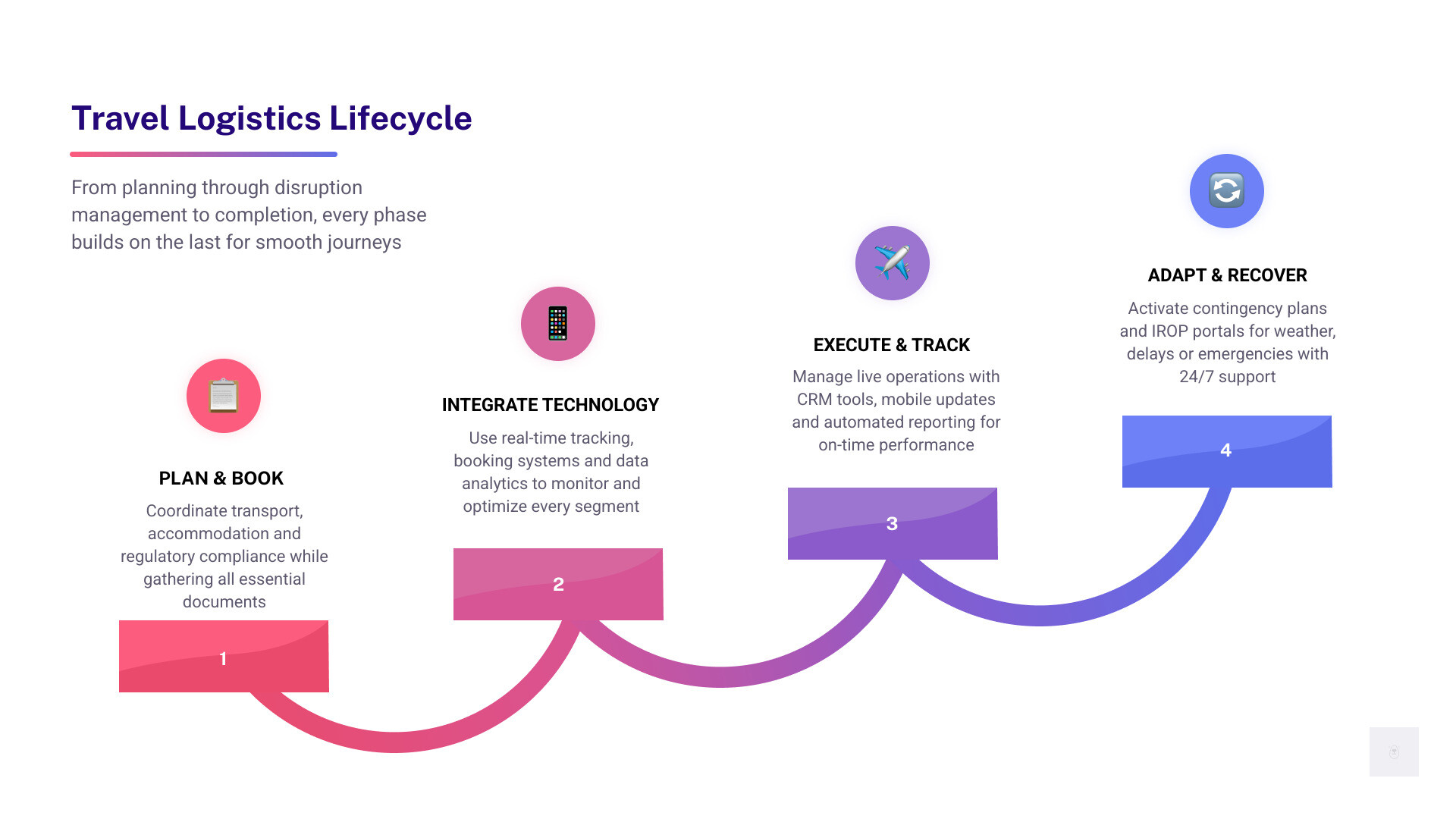
At its heart, effective travel logistics is about orchestrating a symphony of moving parts to ensure a smooth and predictable journey. This isn't a simple task; it requires meticulous attention to detail across several critical areas.
Essential Elements of Planning
The main components of effective travel logistics planning include:
- Transport Coordination: This is often the most visible aspect, involving the booking and management of flights, trains, buses, and private ground transportation. For business travelers, logistical issues such as flight delays, missed connections, and ground transportation problems can lead to an average loss of 4.5 hours per trip. Efficient coordination minimizes these disruptions, ensuring timely arrivals and departures. Services like those specializing in airport transfers, such as for O'Hare Airport Travel Logistics, exemplify how dedicated ground transport management can streamline the journey from touchdown to destination.
- Accommodation Planning:Beyond just booking a room, this involves selecting suitable lodging that aligns with the traveler's itinerary, budget, and specific needs. For groups, it extends to managing block bookings, room assignments, and special requests.
- Itinerary Management: A detailed itinerary is the roadmap of any trip. It outlines daily schedules, appointments, activities, and contact information, ensuring everyone involved knows where they need to be and when.
- Regulatory Compliance:Navigating the legal landscape of travel is a complex but crucial component. This includes adherence to:
- Federal Travel Regulations (FTR) and Joint Travel Regulations (JTR): For government and military personnel, these strict guidelines govern everything from airfare to per diem rates.
- Visa Requirements: For international travel, understanding the specific visa needs for each destination, including transit visas, is paramount. Passports often need to be valid for at least six months beyond the planned return date, and application processes can vary significantly in duration and complexity.
- Fly America Act and Open Skies Agreement: These regulations dictate which airlines can be used for federally funded travel, adding another layer of complexity for corporate and government logistics.
Essential Logistical Documents:
- Valid Passport (with at least 6 months validity post-travel)
- Required Visas (physical or electronic)
- Travel Insurance Policy (including emergency medical and evacuation)
- Flight, Hotel, and Ground Transportation Confirmations
- Detailed Itinerary with Contact Information
- Emergency Contact List
- Copies of all critical documents (digital and physical backups)
Technology in Travel Logistics
In May 2026, technology is no longer just an aid but the backbone of modern travel logistics and coordination. It has revolutionized how journeys are planned, managed, and executed, offering unprecedented levels of efficiency and insight.
- Real-time Tracking and Monitoring: Advanced GPS and telematics systems allow logistics teams to track vehicles, monitor flight statuses, and anticipate delays, enabling proactive adjustments.
- Integrated Booking Systems:Comprehensive platforms consolidate airline, hotel, and ground transportation bookings, providing a single source of truth for all travel arrangements.
- CRM Solutions: Customer Relationship Management systems help personalize travel experiences, track traveler preferences, and manage communication efficiently.
- Data Analytics: By analyzing travel data, organizations can identify cost-saving opportunities, optimize routes, and improve policy compliance. Companies that implement comprehensive travel management programs can reduce travel costs by 20-30% through better vendor negotiations and policy compliance, a testament to data-driven decision-making.
- Mobile Integration: Traveler-facing apps provide instant access to itineraries, booking confirmations, real-time updates, and communication channels, empowering travelers on the go.
- Automated Reporting:Technology automates expense reporting, travel policy compliance checks, and post-trip analysis, saving significant administrative time.
- IROP Portals: Irregular Operations (IROP) portals are crucial for managing unforeseen disruptions like flight cancellations or severe weather. These systems allow logistics providers to rapidly rebook passengers, secure alternative accommodations, and manage distressed travelers with minimal delay.
Contingency Planning and Last-Minute Changes in Travel Logistics
Even the most meticulously planned journey can encounter unexpected hurdles. This is where robust contingency planning and the ability to manage last-minute changes become paramount. Logistics teams are adept at anticipating potential issues and having alternative solutions ready.
- Emergency Protocols:Comprehensive plans for medical emergencies, security incidents, or natural disasters are in place, often including 24/7 support hotlines and access to emergency medical and security services. Providers like CRDF Global, for instance, offer around-the-clock security and medical support, especially for travel to austere and high-risk environments.
- Manifest Rebooking: In cases of flight cancellations or severe delays, logistics providers can quickly rebook entire groups or individual travelers, leveraging their industry connections and technology.
- Weather Disruptions: Backup options for transportation and accommodation are often pre-arranged for destinations prone to extreme weather, minimizing inconvenience.
- 24/7 Support: Access to a dedicated support team at any hour is crucial for addressing issues as they arise, from a missed connection to a lost passport.
- Medical Assistance and Security Coordination: For high-risk or remote destinations, this includes arranging emergency travel medical insurance, coordinating with local medical facilities, and providing security briefings or even on-the-ground security personnel. Over 60% of corporate travel managers report that managing travel logistics for high-risk destinations is one of their top challenges, underscoring the need for specialized expertise in these areas.
- Austere Environment Planning: For expeditions or missions in remote areas, this involves detailed planning for self-sufficiency, communication blackouts, and specialized rescue operations.
Managing Complexity: Corporate, Group, and Expedition Travel
The scope and nature of travel logistics vary significantly depending on the type of journey. What works for an individual vacation won't suffice for a corporate delegation or an Antarctic expedition.
The global corporate travel market is projected to reach $1.9 trillion by 2027, growing at a CAGR of 11.9% from 2021 to 2027, highlighting the immense scale and importance of business travel logistics.
- Corporate Travel Logistics:Focuses on efficiency, cost-effectiveness, and policy compliance for business travelers. This often involves managing large volumes of individual bookings, negotiating corporate rates, and ensuring adherence to company travel policies and regulatory frameworks like the Federal Travel Regulations. For high-risk destinations, corporate logistics providers integrate advanced security protocols, real-time threat monitoring, and 24/7 emergency support to protect employees.
- Group Travel Logistics:Orchestrates travel for multiple individuals moving together, such as conference attendees, sports teams, or tour groups. Key challenges include coordinating schedules for all participants, managing block bookings for flights and hotels, arranging ground transportation for the entire group, and often includes event logistics like venue selection, catering, and translation services.
- Expedition Travel Logistics:Deals with the most extreme and often high-risk environments, such as polar regions or remote wilderness. This requires highly specialized planning, including:
- Altitude Acclimatization: For high-elevation trips, logistics might mandate arriving a day or two early to allow travelers from sea level to adjust, mitigating risks like acute mountain sickness. This pre-trip planning is critical to avoid health issues that could lead to evacuation and disrupt the entire expedition.
- Specialized Equipment Handling: Transporting and managing unique gear, from scientific instruments to mountaineering equipment, requires specific expertise.
- Permits and Regulations:Navigating complex local and international permits, especially for protected or sensitive areas.
- Robust Safety and Medical Support: Often includes on-site medical personnel, satellite communication, and detailed evacuation plans. Antarctic Logistics & Expeditions, for example, specializes in providing comprehensive support for deep-field Antarctic operations, including exclusive camps at the South Pole and Union Glacier.
- Professional Fellowship Coordination: For academic or research programs, logistics involves coordinating travel for international experts, securing visas, and managing complex itineraries that often combine travel with conference attendance and cultural activities.
Feature Corporate Travel Logistics Group Travel Logistics Expedition Travel Logistics Scale High volume, individual or small team bookings Moderate to large groups, coordinated movement Small, specialized teams, remote locations Risk Profile Varies, can include high-risk business zones Generally low to moderate High, often extreme environments Key Focus Cost efficiency, policy compliance, traveler well-being Coordinated movement, shared experiences, event management Safety, specialized equipment, survival, scientific support Complexity High due to volume & policy adherence Moderate to high due to coordination of many individuals Very high due to environment, permits, and safety Support Needs24/7 corporate travel support, security alerts Dedicated group coordinator, on-site support On-site medical/security, specialized communication Technology UseIntegrated booking, expense, risk management platforms Group booking tools, communication apps Satellite comms, specialized tracking, weather monitoring Proximity and Efficiency in Port-Side Logistics
For cruise travelers, the journey to and from the port can be a significant logistical hurdle. Efficient port-side logistics are crucial for a stress-free embarkation and disembarkation day.

- Ground Transportation: This includes everything from private transfers and taxis to shared shuttles and ride-shares. The timing and reliability of these services are paramount, especially on embarkation day when thousands of passengers are converging on the terminal simultaneously.
- Shuttle Timing and Traffic Flow: Ports are busy hubs. Logistics providers must account for potential traffic congestion around terminals and schedule shuttles accordingly to ensure passengers arrive with ample time for check-in and security.
- Predictability: Knowing that your transportation will be there, on time, and get you to your ship without incident provides immense peace of mind. This is particularly true for those flying into nearby airports (like Orlando MCO for Port Canaveral) and needing onward transport.
- Parking Solutions: For those driving to the port, securing reliable and convenient parking is a top priority. While Port Authority charges around $20.00 per day plus tax for on-site parking, offsite parking options are typically more affordable. The convenience of parking directly at or very near the port, such as the closest Port Canaveral parking options, can significantly reduce stress and transfer times on embarkation day.
- Embarkation Day Flow: From luggage handling to terminal check-in, a smooth flow depends on well-coordinated logistics between cruise lines, port authorities, and transportation providers.
- Luggage Handling: Efficient transfer of luggage from vehicles to the ship, and vice versa, is a key component of port logistics, preventing delays and lost items.
- Transfer Frequency: Adequate frequency of shuttles and transfers ensures that passengers don't experience long waits, especially during peak embarkation and disembarkation periods.
Understanding Distance Tiers for Port Travel Logistics
When selecting port parking or transportation, understanding the distance from the terminal can greatly influence your experience:
- Under 1 mile (e.g., Port Parking Space at 0.5mi):These options offer the ultimate convenience. Shorter shuttle rides mean less waiting and quicker access to the terminal, minimizing travel time and stress on embarkation day.
- 1–3 miles (e.g., Park Port Canaveral at 1.6mi): Still very close, these options typically provide frequent shuttle services. The slightly longer shuttle ride is often offset by more affordable rates compared to on-site parking.
- 3–7 miles (e.g., Park N Cruise at 3.6mi, Port Canaveral Parking at 6.3mi, Go Port at 6.8mi): These facilities offer competitive pricing and reliable shuttle services, though transfer times to the terminal will be longer. Travelers should factor in this additional travel time when planning their arrival and departure.
When booking, you'll encounter both aggregators (platforms that list various parking and transportation options from different providers) and direct operators (companies that own and manage their own parking facilities and shuttle fleets). While aggregators offer choice, direct operators often provide more direct accountability and real-time control over their services.
Selecting a Professional Logistics Partner
Choosing the right travel logistics partner is a strategic decision that can significantly impact a traveler's experience and an organization's bottom line. Professional logistics support can lead to a 25% improvement in on-time arrivals and a 40% reduction in last-minute issues for events and conferences, demonstrating the tangible benefits.

Here's what travelers and organizations should look for:
- Experience and Expertise:Look for partners with a proven track record in the specific type of travel you require, whether it's corporate, group, or expedition. Companies specializing in high-risk environments, for example, will have unique insights and networks.
- Comprehensive Service Offerings: A good partner offers end-to-end solutions, from initial planning and booking to on-the-ground support and post-trip analysis. This includes vendor negotiations to secure the best rates and ensure policy compliance, which can reduce overall travel costs by 20-30%.
- Technology Integration:Modern logistics demands advanced technology for real-time tracking, communication, and data management. Inquire about their booking systems, mobile apps, and reporting capabilities.
- Robust Risk Management and Contingency Planning: A strong partner will have clear emergency protocols, 24/7 support, and comprehensive insurance options.
- Accreditations and Certifications: Look for industry accreditations such as IATA (International Air Transport Association) or membership in professional bodies like ACTA (Association of Canadian Travel Agencies), which indicate adherence to high industry standards.
- Customization and Flexibility: The ability to tailor services to specific needs, budgets, and changing circumstances is crucial.
- Transparent Communication:A reliable partner maintains open and clear communication throughout the travel process, providing timely updates and quick responses to inquiries.
Key Partner Selection Criteria:
- Specialized experience in your travel type
- End-to-end service capabilities
- Advanced technology platforms
- Proactive risk management and 24/7 support
- Industry accreditations (e.g., IATA, ACTA)
- Flexibility and customizable solutions
- Transparent pricing and communication
- Strong network of global and local contacts
Frequently Asked Questions about Travel Logistics
How does professional logistics support reduce travel risks?
Professional logistics support significantly mitigates travel risks by implementing robust safety protocols, securing comprehensive emergency insurance, and providing 24/7 monitoring and support. This proactive approach ensures travelers are protected, especially in high-risk zones, and that any issues are addressed swiftly. For instance, expert teams can navigate complex regulatory landscapes, such as visa requirements and Federal Travel Regulations, preventing legal pitfalls. Their ability to manage last-minute changes and emergencies, including manifest rebooking and medical assistance, directly contributes to a 25% improvement in on-time arrivals and a 40% reduction in overall travel issues, as reported by travelers who use such services.
What is the difference between a booking aggregator and a logistics operator?
A booking aggregator is typically an online platform that compiles and displays travel options (flights, hotels, rental cars, parking) from various providers, allowing users to compare and book. They act as intermediaries, simplifying the search process. Examples include general travel booking websites. A logistics operator, on the other hand, often directly manages or has direct control over the assets and services they provide. For instance, a parking logistics operator might own and operate their own parking facilities and shuttle fleets. This direct control often means greater accountability, real-time asset management, and a deeper level of customer support, as they are directly responsible for the service delivery rather than just facilitating a booking.
Why is altitude acclimatization considered a logistical factor in expedition travel?
Altitude acclimatization is a critical logistical factor in expedition travel, particularly for trips to high-elevation locations, because it directly impacts traveler health and safety. Rapid ascent to high altitudes can lead to Acute Mountain Sickness (AMS), characterized by headaches, nausea, and fatigue, which can severely compromise an expedition and even necessitate emergency evacuation. Logistical planning for high-altitude trips often includes:
- Schedule Padding: Building in extra days at intermediate altitudes for gradual ascent and acclimatization.
- Specialized Lodging:Arranging accommodations at specific elevations to aid the acclimatization process.
- Medical Preparedness:Ensuring access to medical support and emergency oxygen, and educating travelers on AMS symptoms.
- Contingency Planning: Having protocols for emergency descents or evacuations if a traveler experiences severe AMS. By proactively managing acclimatization, logistics teams aim to prevent health crises, maintain the expedition's schedule, and ensure the overall success and safety of the trip.
Conclusion

In an increasingly interconnected yet complex world, the art and science of travel logistics have never been more vital. From the individual planning a stress-free cruise departure to global corporations managing high-stakes international missions, effective logistical coordination is the silent guardian of successful journeys. We've seen how meticulous planning, leveraging cutting-edge technology, and robust contingency strategies transform potential chaos into seamless experiences.
Whether it's ensuring regulatory compliance, navigating high-risk environments, or simply getting you to your closest Port Canaveral parking efficiently on embarkation day, professional travel logistics is about peace of mind. By understanding its core components and choosing experienced partners, we can all embrace the future of travel with confidence, knowing that every detail, no matter how small, has been expertly managed. The future of travel coordination promises even greater efficiency and personalization, making every journey not just possible, but truly enjoyable.