Residential Driveway Planning Guide: Materials, Drainage, Installation, and Maintenance
Key Takeaways
- Driveway performance depends on traffic, climate, soil, drainage, and installation quality.
- The base layer and finished slope often matter as much as the visible surface.
- Asphalt, concrete, pavers, and gravel all have practical benefits and limitations.
- Standing water can lead to cracking, shifting, ice, erosion, and premature repairs.
- Routine inspection and early repairs can extend the useful life of nearly any driveway material.
A driveway has to do more than look finished. It must support daily vehicle traffic, direct water away from the home, and hold up through seasonal temperature changes. Before choosing a surface, homeowners can benefit from discussing site conditions, expected traffic, and drainage needs with a qualified residential driveway contractor NJ who understands how those details affect long-term results.
The best choice is rarely the most decorative surface or the lowest initial price. A durable driveway begins with a sound base, appropriate grading, reliable edge support, and a realistic maintenance plan for the material selected.
1. Why Driveway Planning Matters
A driveway is both a traffic surface and a water-management feature. Vehicle weight, repeated parking in the same location, snow removal, shade, nearby trees, and changing temperatures all affect its condition. A surface may appear attractive after installation but fail early if water reaches a weak or poorly compacted base. Low maintenance does not mean maintenance-free. It means the driveway was designed to reduce the likelihood of major, recurring repairs.
2. How to Check the Site Before Work Begins
Start with a practical inspection of the existing drive, surrounding grade, access points, and nearby structures. Look at the property after heavy rain when possible. Note where water collects, whether the surface sinks or cracks, and whether runoff moves toward the garage, foundation, sidewalk, or neighbor's property.
- Identify regular vehicle types, including trucks, trailers, and recreational vehicles.
- Locate tree roots, utility lines, drains, retaining walls, and property boundaries.
- Consider turning room, delivery access, trash collection, and snow storage.
- Confirm whether permits or local runoff requirements apply before work starts.
3. Driveway Materials Compared
- Asphalt: A flexible, practical choice that is often straightforward to patch or resurface. It needs prompt crack attention and can soften during prolonged high heat.
- Concrete: A firm, continuous surface with numerous finish options. It can provide a clean appearance, although cracks and repairs may remain visible.
- Interlocking pavers: Individual units can be replaced when localized settlement occurs, and patterns provide design flexibility. Joints need periodic cleaning and may need fresh jointing sand.
- Gravel: Often economical and naturally permeable, especially for long or rural driveways. Proper edging and periodic grading are important to control ruts and stone migration.
No material is the universal winner. The right option should match the home's appearance, expected load, budget, desired repair approach, and willingness to perform routine upkeep.
4. Drainage and Runoff Planning
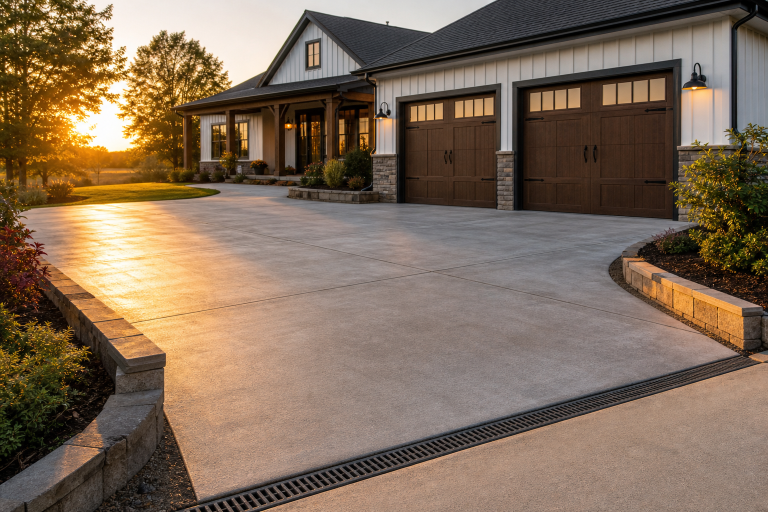
Water should move away from buildings, walking areas, and low points where it can freeze. Driveway slope, swales, channel drains, catch basins, and carefully placed downspouts can all be part of the plan. In suitable conditions, permeable pavement can allow rainwater and melting snow to move through the surface into lower gravel and soil layers, helping reduce runoff.
Permeable materials are not right for every property. Soil infiltration, groundwater conditions, slope, base design, and local requirements should be reviewed first. Water that stays on a driving surface can freeze and create skidding hazards, while poor drainage can also saturate the base and contribute to erosion, as explained in guidance on maintaining drainage features for safer pavement conditions.
5. Why the Base Layer Matters
The visible driveway surface is only the top layer. Below it, prepared aggregate helps spread vehicle loads, manage moisture, and limit movement caused by weak or wet soil. A complete scope should address removal of organic or unstable material, aggregate type and depth, layer-by-layer compaction, finished grade, and edge support. A thin surface installed over a poor base may save money initially, but often creates expensive problems later.
6. Design Details That Improve Daily Use
Practical design makes a driveway safer and easier to use every day. Choose a width that allows car doors to open comfortably, provides turning space for the largest regular vehicle, and creates visible borders where pavement meets lawns or planting beds. Lighting near curves, steps, and parking areas improves visibility. Also consider where snow, bins, deliveries, and visitors will go before finalizing the layout.
7. A Practical Installation Process
- Inspect the property, measure the work area, and confirm site access.
- Mark utilities and verify boundaries before excavation.
- Remove damaged pavement, unsuitable soil, and organic material.
- Shape the subgrade for planned drainage and install the compacted base in layers.
- Add forms, restraints, curbs, or edging as needed.
- Install the selected surface, finish joints and transitions, and inspect drainage features.
- Follow curing or settling instructions before regular vehicle use.
8. A Simple Maintenance Schedule
Spring and Summer
- Check for cracks, loose stone, settled areas, damaged edges, and puddles after rain.
- Clear leaves and sediment from drains, channels, and low spots.
- Remove oil stains and plant growth before they become harder to address.
Autumn and Winter
- Sweep leaves away so they do not trap moisture against the surface.
- Use snow-removal tools suitable for the driveway material.
- Watch for meltwater that refreezes in low areas, especially near garage entrances and walkways.
- Use deicing products only as recommended for the specific surface.
9. Repair or Replace: How to Decide
Minor, isolated cracks may be manageable when the surrounding driveway remains level and stable. Wider spreading cracks, potholes, recurring puddles, broken edges, or widespread settlement usually point to a deeper issue involving drainage, base failure, or soil movement. Repeated surface patches can be inefficient when the structure below the surface is no longer reliable. A professional assessment can help distinguish cosmetic damage from a condition that calls for reconstruction.
10. Common Homeowner Questions
Which material needs the least maintenance?
That depends on climate, installation quality, traffic, drainage, and appearance expectations. Asphalt may need sealing and crack repairs, concrete needs joint and crack monitoring, pavers need joint care, and gravel needs periodic grading and replenishment.
What should a driveway quote include?
A detailed quote should list the measured area, demolition and disposal, base preparation, drainage work, surface thickness or installation method, edge treatment, cleanup, curing expectations, warranty terms, and payment schedule.
11. Final Planning Checklist
- Define traffic needs and daily use patterns.
- Review soil, slope, runoff, nearby structures, and access concerns.
- Compare materials by function, appearance, upkeep, and repair needs.
- Give base preparation, drainage, and edge support the attention they deserve.
- Request a written scope and maintain the finished driveway through every season.
- Residential Driveway Planning Guide: Materials, Drainage, Installation, and Maintenance - August 20, 2026
- A Flexible Zion National Park Itinerary for Hikers, Families, and Scenic Road Trippers - August 20, 2026
- Persistent Odors Need Source-Level Treatment: FIRESTONE Restoration Provides Professional Ottawa Sanitizing Services - August 20, 2026