Emergency Readiness for Older Adults: A Practical Plan for Living Independently
Table Of Contents
- Why Emergency Readiness Matters
- Start With A Simple Risk Check
- Build A Personal Response Plan
- Choose Safety Tools That Fit Daily Life
- Make The Home Safer
- Prepare Health Information
- Create A Local Support Network
- Plan For Common Emergencies
- Test And Update The Plan
- Common Questions
- Conclusion
Living alone does not mean living without support. A practical emergency readiness plan helps older adults stay confident at home, continue daily routines, and get help faster when something unexpected happens. Tools such as senior monitoring devices can be a useful part of that plan, especially when a phone may not be nearby after a fall or sudden illness.
The best plan is simple enough to use under stress. It should identify likely risks, make important information easy to find, reduce hazards around the home, and give trusted people clear instructions for checking in or responding. A few thoughtful preparations can make a major difference during a fall, fire, weather event, power outage, or medical emergency.
Why Emergency Readiness Matters
Emergencies often become harder when there is a delay in getting help. A fall can leave someone unable to reach a phone. A storm can interrupt power, transportation, or regular caregiver visits. Smoke, illness, confusion, or a medication problem can make it difficult to think through the next step. Planning ahead protects independence by helping a person respond without relying on memory in stressful moments.
Older adults may have additional considerations, including limited mobility, hearing or vision changes, medical equipment, pets, medication schedules, or less access to transportation. The goal is not to prepare for every possible event perfectly. It is to ensure that help, information, and essential supplies are accessible when needed.
Start With A Simple Risk Check
Begin with a brief review of the home, routines, and nearby support. Walk through the home at the times it is most often used, including early morning and evening, to notice dark areas, narrow paths, loose items, and where a person may be alone.
Questions To Ask
- Which rooms have the greatest risk of slipping, tripping, or falling?
- Can help be reached from the bedroom, bathroom, yard, garage, and entryway?
- What happens if a phone is out of reach, uncharged, or not working?
- Is there a backup plan for a power, internet, or cell service outage?
- Who can check in during a storm, illness, or missed appointment?
- Are medications, mobility aids, pets, and transportation needs part of the plan?
Build A Personal Response Plan
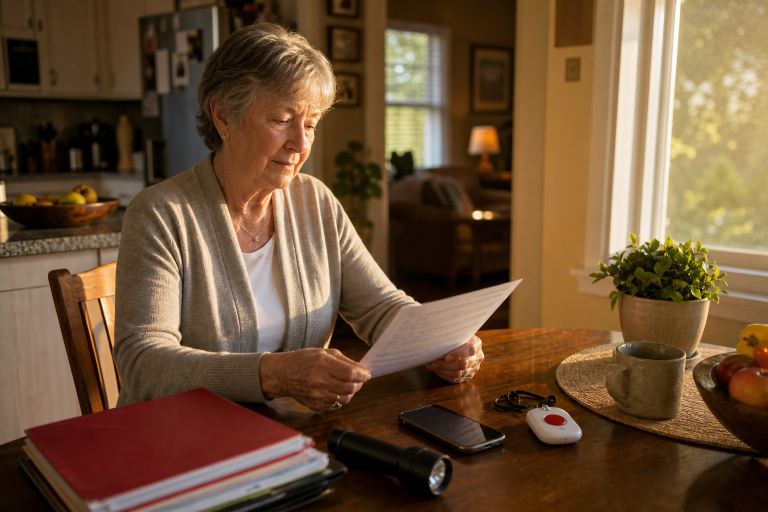
Create a one-page emergency plan and keep copies where they can be found quickly. Put one near the refrigerator or main phone, give one to a trusted contact, and keep a smaller copy in a wallet, bag, or mobility device. Clear, plain language is more useful than a long document.
Suggested Plan Details
- List primary emergency contacts, plus at least one backup person.
- Write the full home address, apartment number, gate code, and entry instructions.
- Record allergies, major health conditions, current medications, and mobility needs.
- Include preferred doctors, hospital, pharmacy, and insurance details.
- Add care instructions and contact information for pets or service animals.
- State what should happen if a primary caregiver cannot respond.
Choose Safety Tools That Fit Daily Life
The most useful safety tool is one that fits naturally into a person's routine. A device should not feel complicated, uncomfortable, or easy to forget. Consider daily habits first, then compare features based on where and how help may be needed.
- Easy activation: A help button should be easy to press for users with limited hand strength or dexterity.
- Two-way communication:Being able to speak to someone without having to find a phone can be valuable.
- Home and mobile coverage:Think about bathrooms, gardens, driveways, errands, and walks.
- Fall-related support:Automatic fall detection may add protection, but it cannot replace pressing a help button when possible.
- Water resistance: Bathrooms and kitchens are common places for slips and spills.
- Battery, privacy, and cost:Check charging needs, connection limits, fees, cancellation terms, and data practices.
Make The Home Safer
Small home changes can prevent many common problems without making a home feel institutional. The CDC offers practical guidance on preventing falls and making the home safer, including better lighting, grab bars, and clearer walking paths.
Room-By-Room Checklist
- Improve lighting near stairs, hallways, beds, and entrances.
- Remove loose rugs, cords, clutter, and low furniture from walking paths.
- Use non-slip mats in wet areas and install sturdy grab bars where needed.
- Keep frequently used items between waist and shoulder height.
- Place flashlights, backup batteries, and a charged phone in known locations.
- Keep emergency contact information visible near the phone and refrigerator.
Prepare Health Information
Accurate health information can help responders, clinicians, and caregivers act faster. Keep a printed copy in an easy-to-find spot and a secure digital copy that a trusted person can access if needed. Update the list whenever a prescription, diagnosis, provider, or emergency contact changes.
Include medication names, doses, schedules, allergies, serious conditions, insurance details, preferred language, and hearing, vision, mobility, or cognitive support needs. Also, identify the people authorized to receive health updates.
Create A Local Support Network
An emergency plan is stronger when more than one person knows about it. Family members may help, but neighbors, friends, building staff, faith communities, and health professionals can also be part of a reliable support network.
Set Up A Check-In System
- Choose one or two regular check-in times.
- Decide how long someone should wait before trying again.
- Name a backup contact if the first person is unavailable.
- Share a key or approved entry method only with trusted people, when appropriate.
- Explain how to communicate during a power outage or evacuation.
Plan For Common Emergencies
Falls And Sudden Illness
Keep a communication device within reach. After a serious fall, do not rush to stand up. Call for emergency help if there is severe pain, bleeding, confusion, chest discomfort, trouble breathing, weakness, or an inability to move safely. When speaking with responders, state the address first, then describe what happened and any urgent medical concerns.
Fire, Smoke, Severe Weather, And Power Loss
Keep exits clear and practice leaving the home calmly. If there is fire or smoke, leave immediately when it is safe and do not return for belongings. For storms and outages, store water, shelf-stable food, medications, batteries, backup lighting, and pet supplies. Ready.gov provides useful guidance for building an emergency supply kit. Include mobility aids, chargers, oxygen needs, and transportation plans if evacuation becomes necessary.
Test And Update The Plan
A plan only works if the details remain current. Review it every season and after a fall, move, hospitalization, new diagnosis, medication change, or change in caregiver support. Test phones, help buttons, alarms, flashlights, and backup batteries. Confirm that emergency contacts can still respond, and practice the steps during a calm moment.
Common Questions
Can Someone Living Alone Stay Independent And Still Use Safety Support?
Yes. Planning for emergencies can support independence by making it easier to stay home confidently while knowing how to get help when needed.
Is A Smartphone Enough?
A smartphone can be helpful, but it may be out of reach, uncharged, locked, or difficult to use after a fall. A backup option adds flexibility.
Does Fall Detection Replace Pressing A Help Button?
No. Automatic detection can miss some falls or create false alerts. A person should still call for help whenever possible.
How Often Should The Plan Be Reviewed?
A seasonal review works well for most households, with updates whenever health, housing, medications, or support contacts change.
Conclusion
An effective emergency plan does not need to be complicated. It should make it easier to reach help, reduce everyday hazards, organize essential health information, and give trusted people a clear role. With a few practical steps, older adults can protect their independence while preparing for the moments when extra support matters most.