Everything You Need to Know About Fixing a Broken Garage Door Spring in Frederick, MD
How Garage Door Springs Work and Common System Types
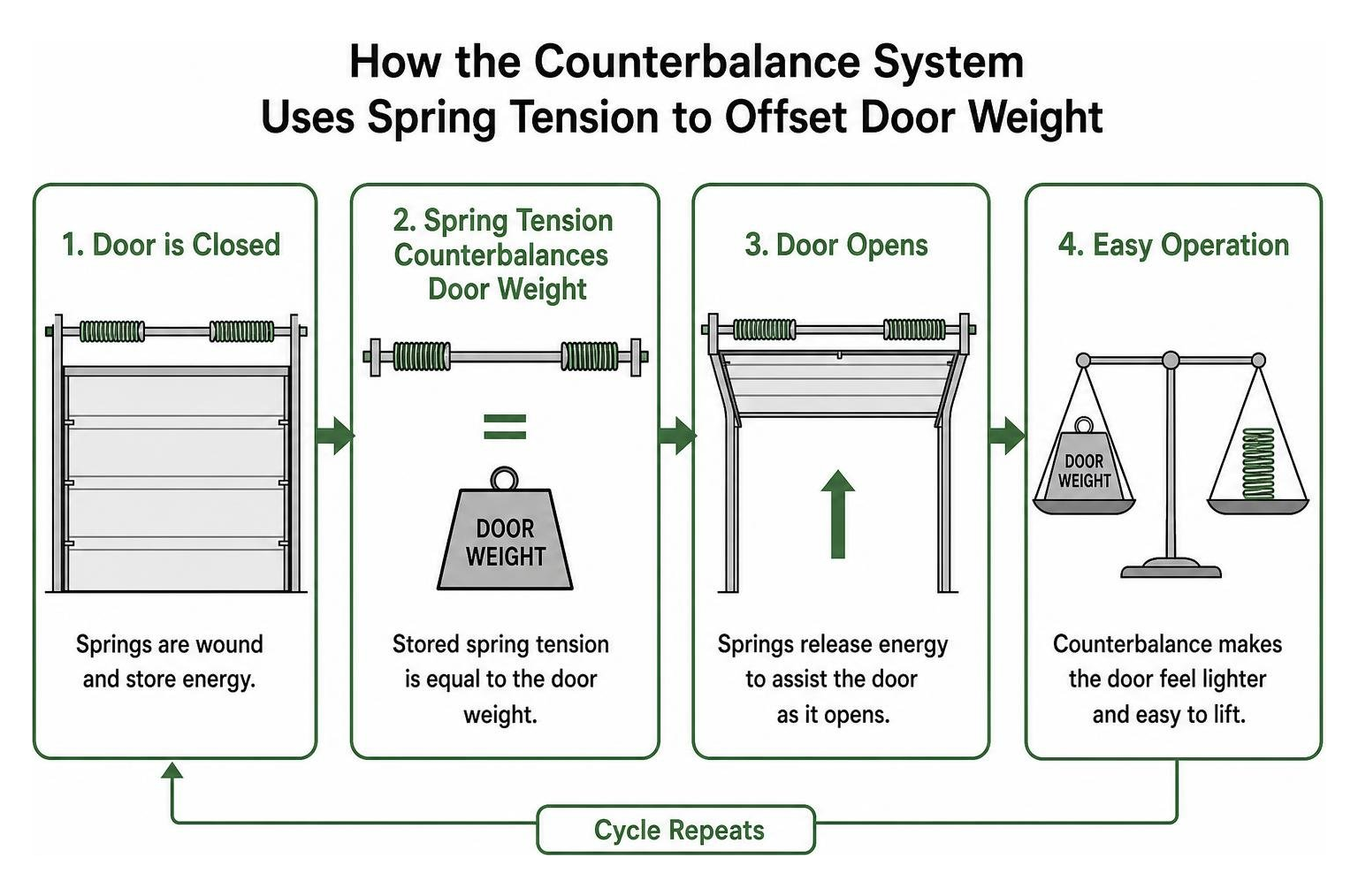
To understand why a broken garage door spring causes such a significant disruption, it helps to look at the mechanics of your garage door system. Your garage door is not actually lifted by the electric motor; the opener unit simply acts as the motorized guide that regulates the speed and travel limits of the door. The real heavy lifting is performed by the counterbalance spring assembly, which is engineered specifically to offset and neutralize the immense physical weight of the door panels.
Residential garage doors typically weigh anywhere between 150 and 350 pounds, depending on their size, construction materials, insulation density, and decorative glass inserts. Without the stored potential energy provided by tightly wound or extended steel springs, your automatic garage door opener would burn out its internal drive gears or motor almost instantly trying to hoist that dead weight. The springs store mechanical energy when the door is closed and release that energy to assist the lifting action when the door opens, allowing a heavy overhead door to feel virtually weightless and be lifted easily with one hand when properly balanced.
Torsion Springs vs. Extension Springs
Most modern residential overhead doors utilize one of two primary spring systems. Understanding which system is installed in your garage is the first essential step in diagnosing issues and planning maintenance or repairs.
- Torsion Springs: These heavy-duty coiled springs are mounted horizontally on a solid steel shaft directly above the top edge of the closed garage door. As the door closes, steel lift cables attached to bottom brackets rotate aluminum cable drums on each end of the shaft, twisting the torsion springs tightly along their stationary and winding cones. When opening, the springs unwind, transferring rotational torque through the shaft and drums to pull the lift cables and raise the door. Torsion springs provide superior balance, smooth operation, and have fewer exposed moving parts along the tracks.
- Extension Springs: These springs are mounted horizontally along the upper left and right tracks, running parallel to the ceiling. Rather than twisting to create rotational torque, extension springs stretch linearly as the door closes and contract as it opens. Because an extension spring is under intense linear tension when extended, it should always be fitted with an internal safety containment cable running through the center of the coil. If an extension spring without a safety cable snaps, it can fly across the garage with lethal force.
Feature Torsion Springs Extension Springs Location Above the door header on a center shaft Parallel to horizontal ceiling tracks ActionTwists along its axis to store rotational torque Stretches lengthwise to store linear tension Operation Smooth, balanced, and uniform lift on both sides Can become jerky or uneven if springs wear at different rates Safety High tension, but safely contained on a steel tube High tension, requires internal safety cables to prevent projectiles Signs of a Bad or Faulty Spring System
You do not always need to see a complete structural snap to know that your garage door springs are failing or nearing the end of their operational lifecycle. Being aware of the early warning signs allows homeowners to address spring fatigue before experiencing a sudden failure that traps vehicles inside the garage. Keep an eye and ear out for these common indicators:
- A Loud Bang in the Garage:When a tightly wound garage door spring snaps, the sudden release of hundreds of foot-pounds of stored mechanical energy produces a loud, explosive noise that homeowners frequently mistake for a gunshot or a falling heavy object.
- Visible Coil Separation: In torsion systems, a broken spring presents an obvious visual gap of two inches or more between the severed sections of the coiled steel wire along the overhead shaft.
- Heavy Door Feel During Manual Operation: If you pull the emergency release cord and find that the door feels exceptionally heavy or completely impossible to lift off the ground by hand, one or both springs have lost their counterbalancing tension.
- Crooked or Binding Door Panels: If an extension spring on one side fails or loses elasticity faster than its counterpart, the door will pull unevenly, causing the panels to tilt crookedly within the vertical tracks and potentially jam or derail rollers.
- Opener Motor Strain and Stalling: If your automatic opener hums, groans, or moves the door only a few inches before reversing or shutting down, the opener's safety sensors and load-monitoring circuits are detecting excessive weight due to dead or fractured springs.
- Slack or Tangled Lift Cables:When a spring breaks, tension is immediately lost across the counterbalance assembly, causing the aircraft-grade lift cables to slip off the drums and dangle loosely along the sides of the door.
Why You Should Not Delay Steps to Repair Broken Springs
When a spring breaks, the immediate temptation for many homeowners is to force the automatic opener to lift the door or attempt repeated cycles to retrieve a trapped vehicle. We strongly advise against this course of action. Continuing to operate a door with compromised springs puts catastrophic strain on the opener’s nylon drive gears, motor assembly, and chain or belt mechanism, often turning a routine spring replacement into an expensive full-system overhaul.
Furthermore, an unbalanced overhead door is an extreme safety hazard. A door weighing hundreds of pounds without working counterbalance support can slam shut unexpectedly if an opener gear strips or if you attempt to prop it open insecurely. If you notice signs of spring failure, it is essential to repair broken springs promptly before secondary damage spreads to your tracks, hinges, roller brackets, and opener carriage.
Can You Safely Repair Broken Springs on Your Own?
Homeowners often wonder whether garage door spring replacement is a viable weekend DIY project. While tasks like lubricating hinges or replacing weatherstripping are suitable for homeowners, replacing high-tension springs is exceptionally dangerous and should be left to trained professionals. Torsion springs hold immense energy capable of breaking bones, severing fingers, or causing severe head injuries if handled without proper winding bars, torque management protocols, and industry training.
Professional technicians calculate the exact wire gauge, inner diameter, coil length, and wind direction required to balance your door's exact weight. Installing the incorrect spring size or improperly securing the winding cones can lead to violent spring unwinding, property damage, or severe personal injury.
Critical Precautions Before You Repair Broken Springs or Operate the Door
If you discover or suspect a broken spring in your garage, prioritize your household's safety by following these immediate protective measures:
- Disengage the Automatic Opener: Pull the red emergency disconnect cord down and toward the door to decouple the carriage from the drive track. This ensures the motor cannot accidentally activate and damage itself trying to lift dead weight.
- Keep the Immediate Area Clear: Ensure children, family members, and pets stay completely away from the garage door perimeter until repairs are completed.
- Do Not Remove Bottom Brackets: The bottom corner brackets on your garage door are under constant, direct spring tension via the lift cables. Never loosen or remove these bolts under any circumstances.
- Use Personal Protective Gear: If you must enter the garage near the door, always wear sturdy work gloves and impact-resistant eye protection.
- Establish Clear Communication: If another adult is assisting you with securing the area or retrieving items, coordinate every movement clearly before touching any door hardware.
How to Safely Handle a Garage Door with a Broken Spring
If your vehicle is trapped inside the garage during an emergency and you cannot wait for immediate professional service, you may need to open and secure the door manually for a single egress. This procedure should only be performed as an absolute necessity and with maximum caution.
Safely Opening and Securing the Door Manually
Never attempt to lift a door with a broken spring alone. A standard double-car garage door can feel like dead weight exceeding 250 pounds when unsupported by spring torque. Position two capable adults on either side of the door. Use proper lifting technique with bent knees and a straight back, utilizing a pry bar or timber block if necessary to gain initial finger clearance beneath the bottom panel.
Lift the door slowly, smoothly, and simultaneously to prevent the panels from racking or binding in the tracks. Once the door is fully raised in the overhead position, never rely on the opener or track friction to hold the door open.
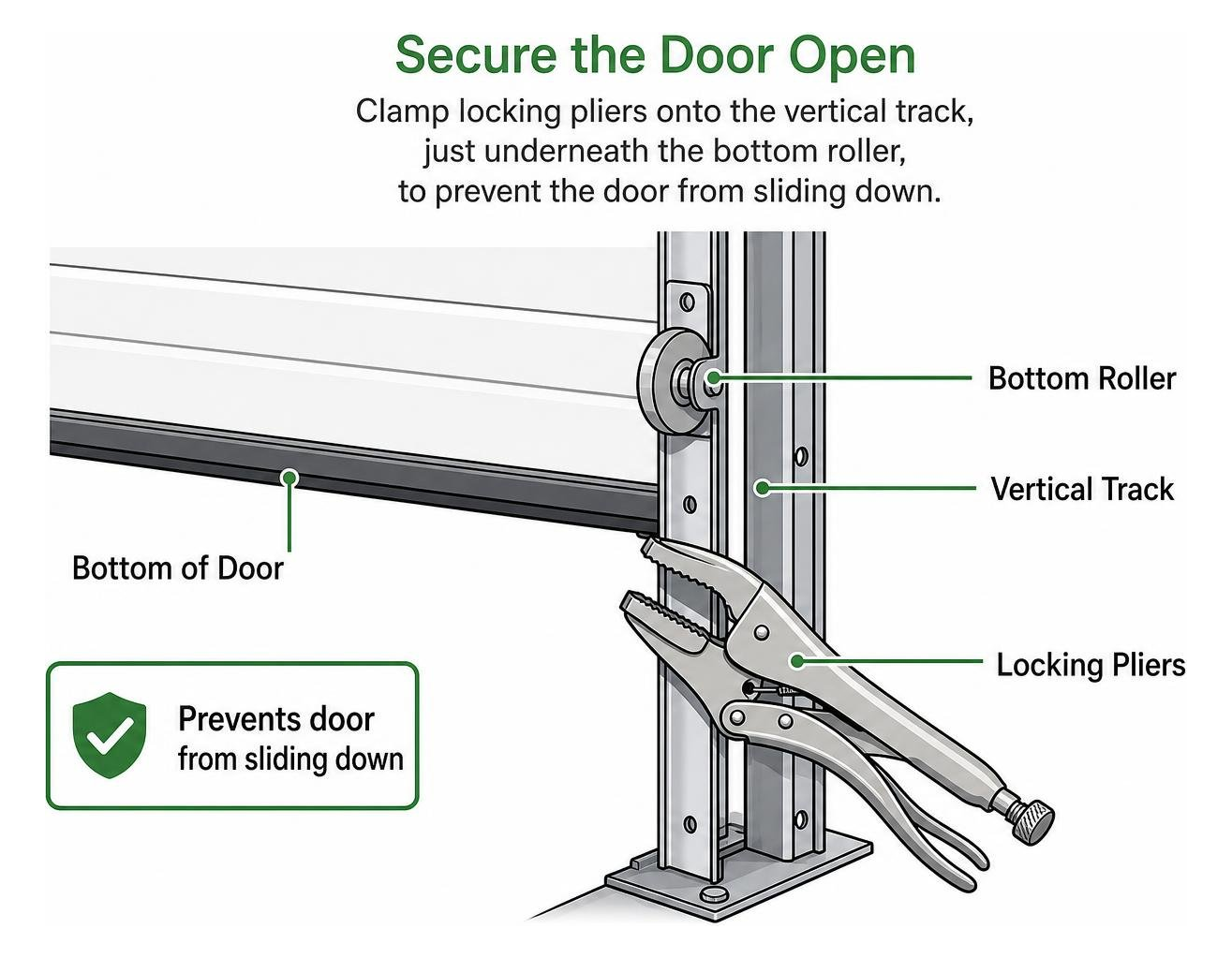
Immediately clamp two pairs of heavy-duty locking pliers (Vise-Grips) or sturdy C-clamps tightly onto the metal tracks directly underneath the lowest bottom roller on each side. This mechanical block prevents the heavy door panels from sliding back down under gravity while you maneuver your vehicle outside.
Safely Closing and Re-engaging the Door
Once your vehicle is out of the garage, prepare to close the door immediately to secure your home. Have both individuals firmly support the weight of the bottom panel before releasing and removing the locking pliers from the tracks. Lower the door slowly and steadily toward the concrete floor, keeping fingers and hands strictly away from panel joints, hinges, and track edges where crushing injuries can occur.
Once the door is resting fully against the ground, leave the emergency release disengaged and lock the manual slide lock on the inside of the track to secure the garage until a certified service technician arrives to perform the required spring replacement.
Garage Door Spring Lifespan, Replacement Costs, and Maintenance
Garage door springs are engineered around cycle ratings rather than calendar years. One complete cycle consists of the garage door opening fully and closing completely once. Standard factory-installed torsion and extension springs are typically rated for 10,000 cycles. If an average household uses the garage door four times per day (for commuting, running errands, and yard access), a 10,000-cycle spring system will last approximately 7 to 9 years before metal fatigue inevitably leads to failure.
High-traffic households that use their doors 8 or more times daily may see standard springs snap in under 4 years. When replacing broken springs, many homeowners opt to upgrade to high-cycle springs rated for 25,000 to 50,000 cycles, which feature thicker wire gauges and specialized heat treatments designed to provide decades of trouble-free operation.
Preventative Maintenance and Balance Testing
While every spring will eventually succumb to cyclic steel fatigue, regular preventative care extends spring longevity and ensures safe operation throughout their service life. Perform a simple manual balance test once every month to verify proper counterbalancing:
- Disconnect the automatic opener by pulling the emergency release handle when the door is closed.
- Manually lift the door approximately three to four feet off the floor (the halfway point) and carefully release your grip.
- A properly balanced door will stay suspended in place or move only a couple of inches. If the door rapidly falls shut or shoots upward, the spring tension is incorrect and requires professional adjustment.
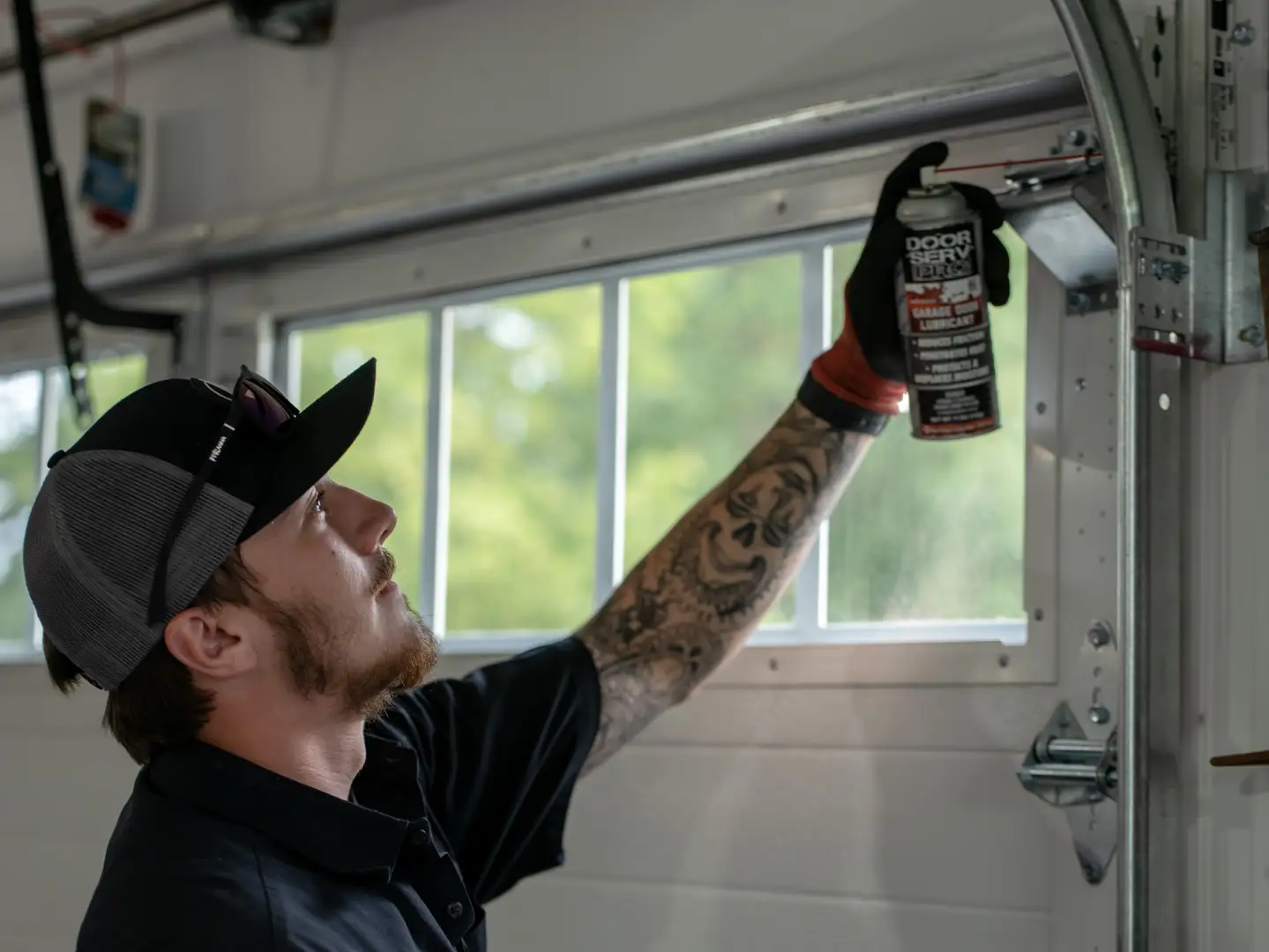
Additionally, apply a dedicated non-greasy silicone or white lithium garage door spray across the entire length of the spring coils every three to six months. Lubricating the coils minimizes surface friction as the metal coils twist against each other and guards against rust accumulation caused by seasonal humidity. Avoid using heavy automotive grease or penetrating oils like standard WD-40, which attract abrasive road grime and accelerate mechanical wear.
Frequently Asked Questions About Garage Door Springs
Why do technicians recommend replacing both springs if only one is broken?
Most residential garage doors equipped with torsion systems utilize two springs installed along the same center shaft. Both springs experience the exact same number of opening and closing cycles and operate under identical thermal and mechanical conditions. When one spring breaks from cyclic metal fatigue, the remaining spring has experienced the exact same structural wear and is almost certain to fail shortly thereafter. Furthermore, pairing an old, weakened spring with a brand-new, stiff spring creates an uneven tension profile across the door, leading to track binding, cable derailment, and premature failure.
How much does professional garage door spring replacement cost?
Professional spring replacement costs depend on several factors, including whether the system uses extension or torsion springs, the weight and dimensions of the door, wire gauge specifications, and whether high-cycle commercial-grade upgrades are selected. Total replacement costs typically include professional labor, safe disposal of old tension hardware, installation of properly sized springs, dynamic balance calibration, and a full safety inspection of cables, drums, rollers, and bearings.
How do I know if my garage door is properly balanced?
The manual halfway balance check is the gold standard for testing door balance. Disconnect your electric opener and manually position the door at the midpoint of its travel path. If the door hovers steadily without dropping or pulling upward, the springs are calibrated correctly. If you struggle to lift the door or it crashes downward, the counterbalance system requires immediate attention.
Conclusion
A broken garage door spring is more than just an inconvenient obstacle; it is a major mechanical failure that compromises the safety, security, and functionality of your entire home. By understanding the critical role springs play in counterbalancing heavy overhead doors, recognizing the early signs of spring wear, and adhering strictly to safety protocols, you can protect your property and family from unnecessary risks. When unexpected spring failure occurs, relying on experienced local technicians ensures that your door is fitted with precisely calibrated, high-durability components that restore effortless, safe operation for years to come.